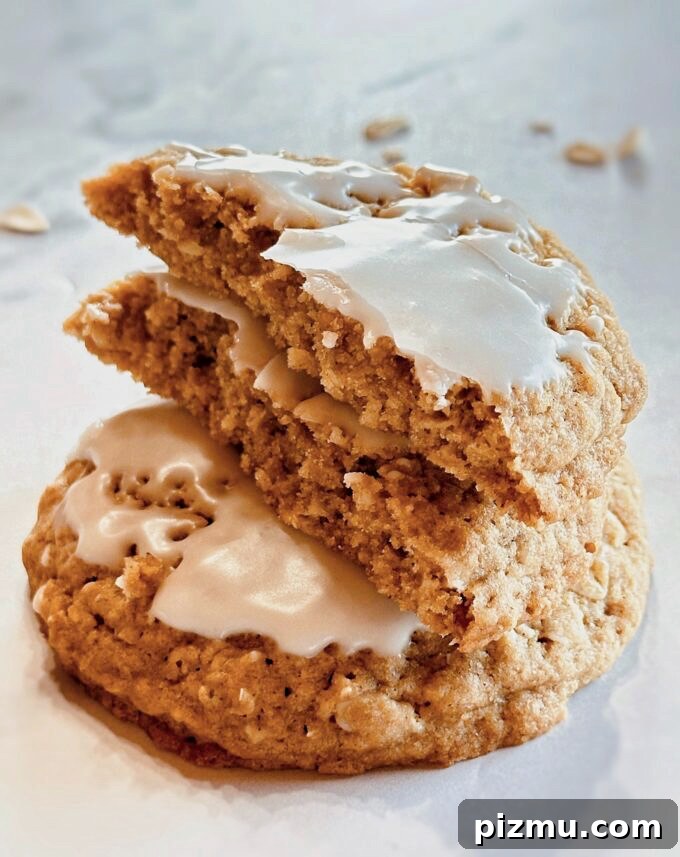
These Iced Oatmeal Cookies are inspired by the classic store-bought varieties you may remember from the grocery aisle. They have tender, soft centers, slightly chewy edges and a thin vanilla icing that sets to a delicate crackle. Serve them with a tall glass of milk for a nostalgic treat.

If you grew up grabbing packaged cookies because home baking was rare or busy schedules made it easier, these homemade iced oatmeal cookies will bring back memories. There were always two main types available: the very inexpensive, firm cookies with a thin white icing, and the softer, more expensive varieties that felt like a small upgrade. These homemade cookies aim for that softer, bakery-style texture while keeping the familiar thin vanilla icing.
How to make this recipe
Pulsing the oats (optional)
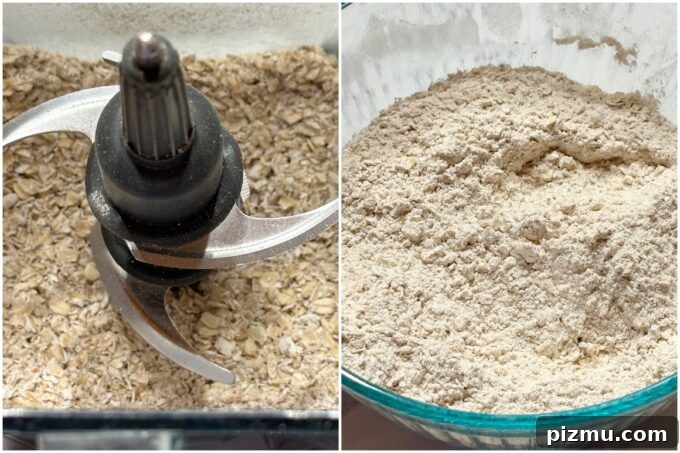
Old-fashioned whole oats are large and yield a big chewy texture. To mimic the finer texture often found in packaged cookies, pulse the oats briefly in a food processor or blender. This reduces some of the flake size while preserving chewiness. If you prefer a more rustic, chunky oatmeal cookie, skip pulsing and use the oats as-is.
To pulse: add the oats to a blender or food processor and pulse 8–10 times until some oat flour appears among the oats. Mix the processed oats into the dry ingredients and set aside.
Making the cookie dough
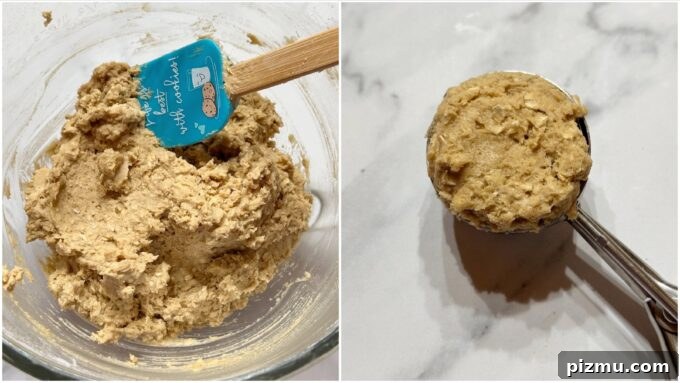
The dough for these cookies is soft and a bit sticky, which helps create a tender center and chewy edges. Using one cup of butter keeps the dough easy to scoop and shape. Chill the dough at least one hour before baking to prevent excessive spreading. Using silicone baking mats or parchment helps control spread and creates even bottoms.
- In a medium bowl, whisk together the flour, baking powder, baking soda, salt, nutmeg and cinnamon. Stir in the oats, whether pulsed or whole. Set aside.
- In the bowl of a stand mixer or with a hand mixer, beat the butter and both sugars on medium-high for about two minutes until very creamy. Add the eggs one at a time, beating after each. Beat in the molasses and vanilla. Add the dry ingredients and mix on medium only until just combined, scraping the bowl once or twice.
- Refrigerate the dough for at least one hour to firm it up and reduce spreading during baking.
- Preheat the oven to 350°F (175°C). Position the oven rack in the center and line baking sheets with parchment paper or silicone mats.
Baking the cookies
- Use a medium cookie scoop (about 1.5 tablespoons) and space dough balls at least 2 to 2½ inches apart. Limit to about eight cookies per sheet for best results. Lightly spray the scoop with nonstick spray if the dough sticks.
- Bake for 12–13 minutes, until the edges are golden and set while centers still look slightly soft. Let cookies cool on the sheet for about three minutes, then transfer to a wire rack to finish cooling.
Tips for success
- Dark brown sugar adds deeper molasses flavor; if using light brown sugar, you can add two extra tablespoons of molasses for a richer taste.
- Use unsulphured molasses (standard baking molasses), not blackstrap, which is too strong and bitter for this recipe.
- Chilling the dough is essential. Unchilled dough spreads too much and yields thin, flat cookies.
- If chilling overnight, portion the dough into balls first and refrigerate them on a tray so they stay easy to scoop and bake directly from cold.
- For crisper cookies, bake until the tops reach a deeper golden color.

The icing
The thin icing that finishes these cookies uses just three ingredients and creates a classic crackled top when applied correctly.
- 1 1/2 cups sifted powdered sugar
- 2 to 2 1/2 tablespoons milk
- 1/4 teaspoon pure vanilla extract
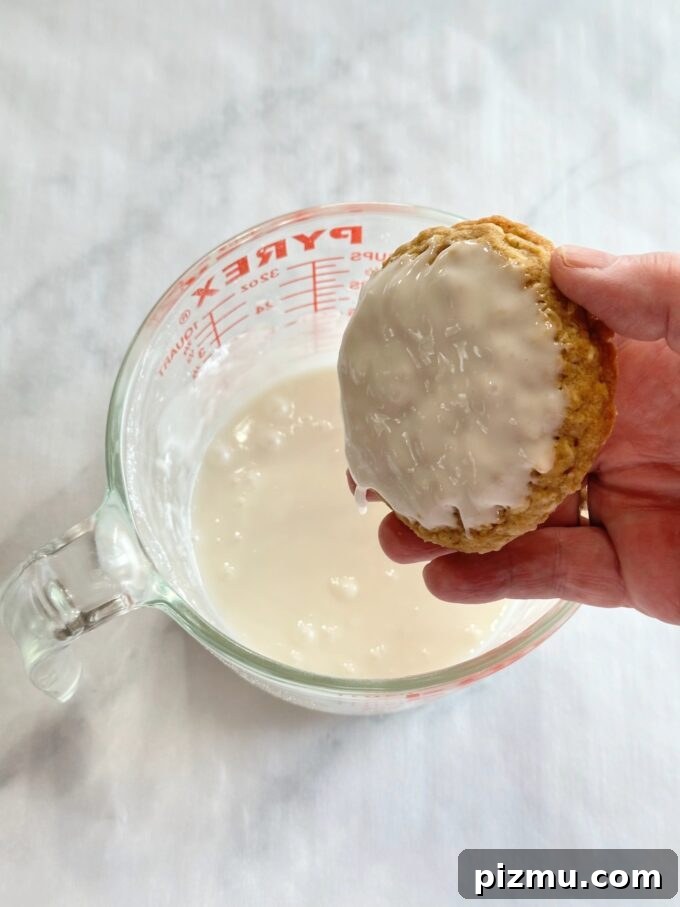
Sift the powdered sugar before mixing to avoid lumps. Combine the powdered sugar with 2 tablespoons of milk and the vanilla, then add more milk a teaspoon at a time until the icing reaches a medium-thick consistency—thicker than a glaze but still pourable.
To ice: lightly dip or brush the top of each cooled cookie, coating the surface without fully dunking. For the characteristic crackly appearance, barely coat the surface. Let the iced cookies sit at room temperature for at least one hour so the icing can set.
FAQ
Can I freeze the dough?
Yes. Freeze the dough up to two months. Thaw overnight in the refrigerator before scooping and baking. Alternatively, portion dough into balls, freeze on a tray, then transfer frozen balls to a freezer bag and bake from frozen—adding a minute or two to the bake time if needed.
How long will the dough keep refrigerated?
Tightly wrapped, the dough will keep up to one week in the refrigerator.
How long will baked cookies stay fresh?
Store baked cookies in an airtight container at room temperature for up to four days. For longer storage, freeze baked cookies layered with parchment paper for up to two months.
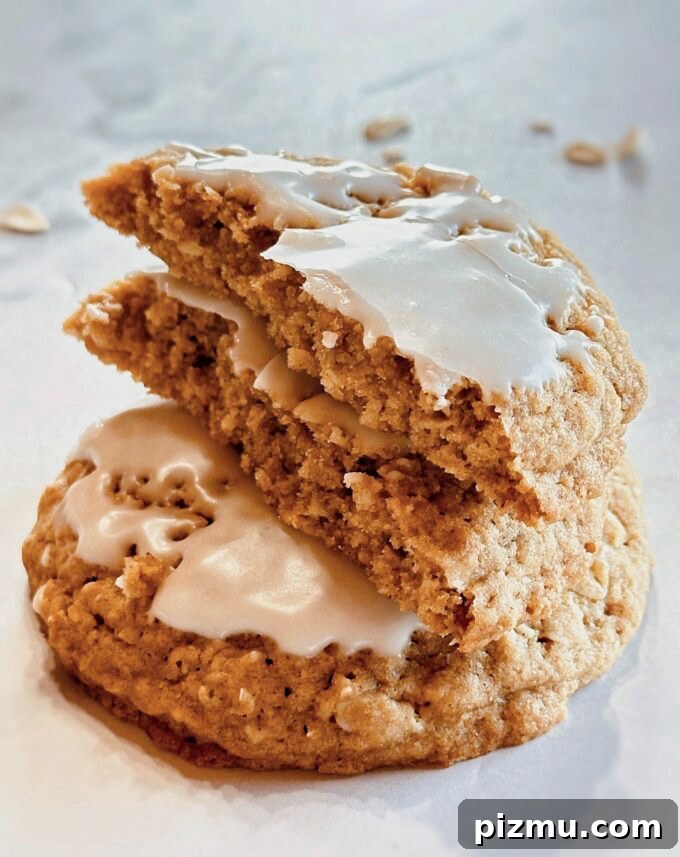
If you try this recipe, enjoy the nostalgic flavor and texture—soft, slightly chewy oatmeal cookies topped with a simple, thin vanilla icing that brings back memories of classic store-bought treats.