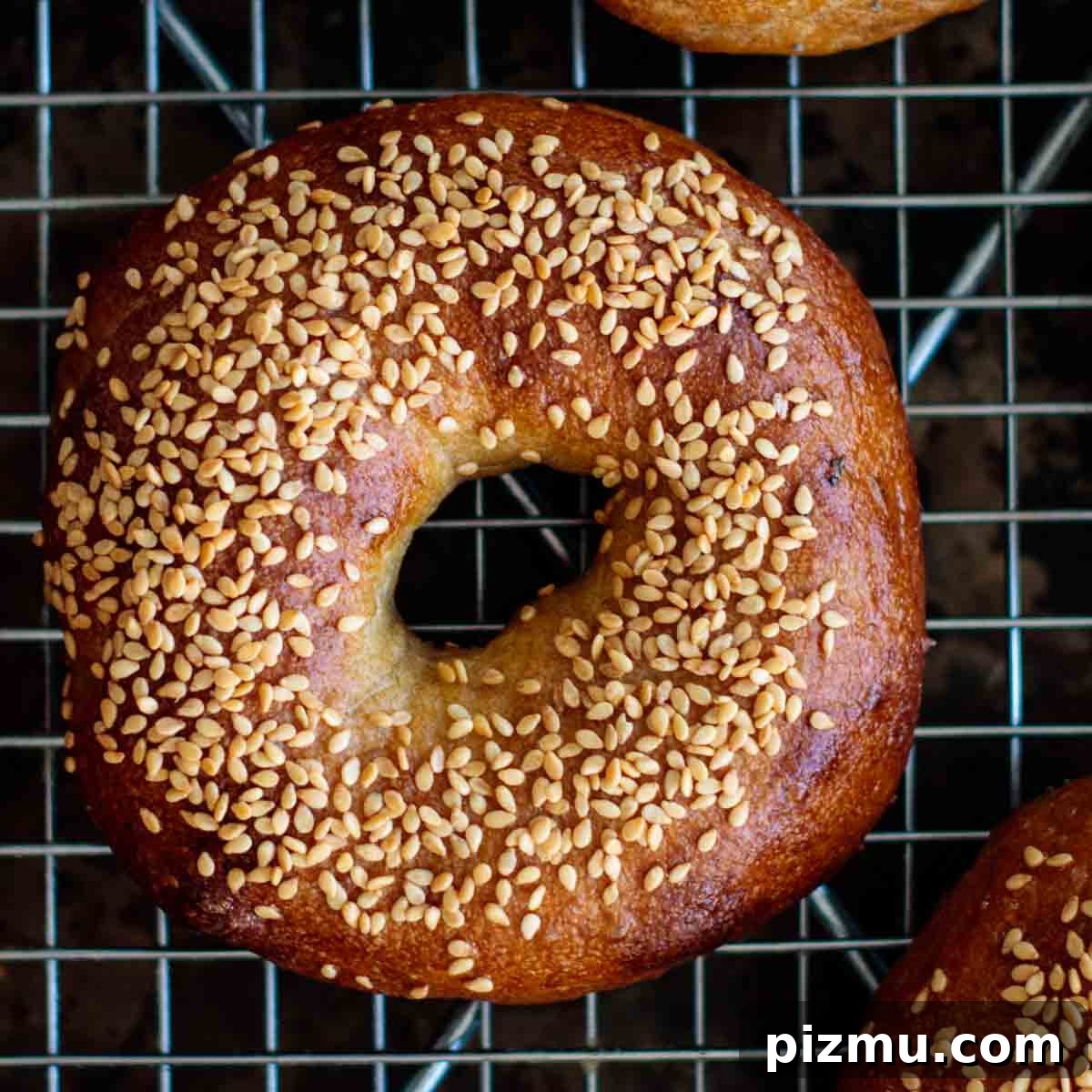
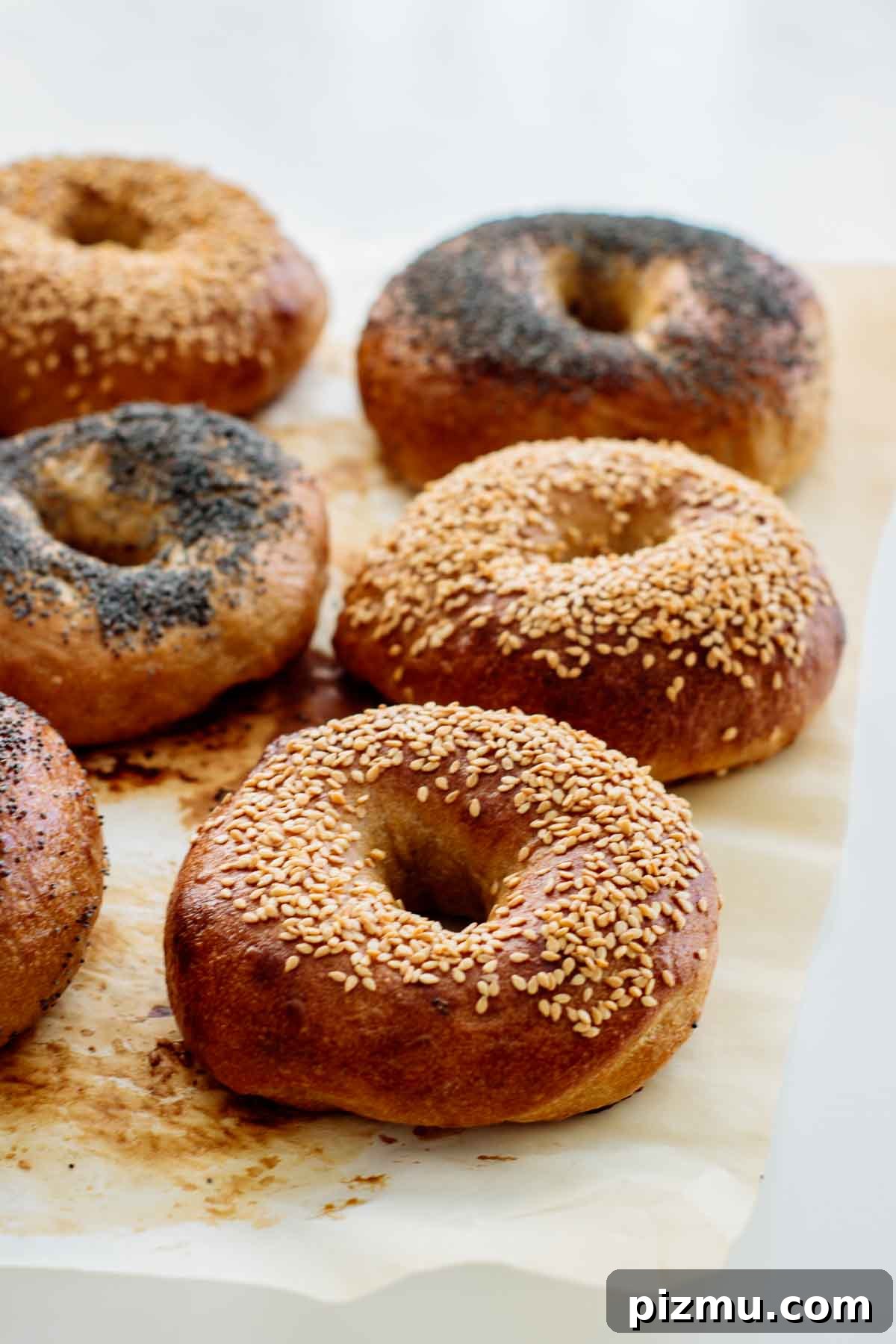
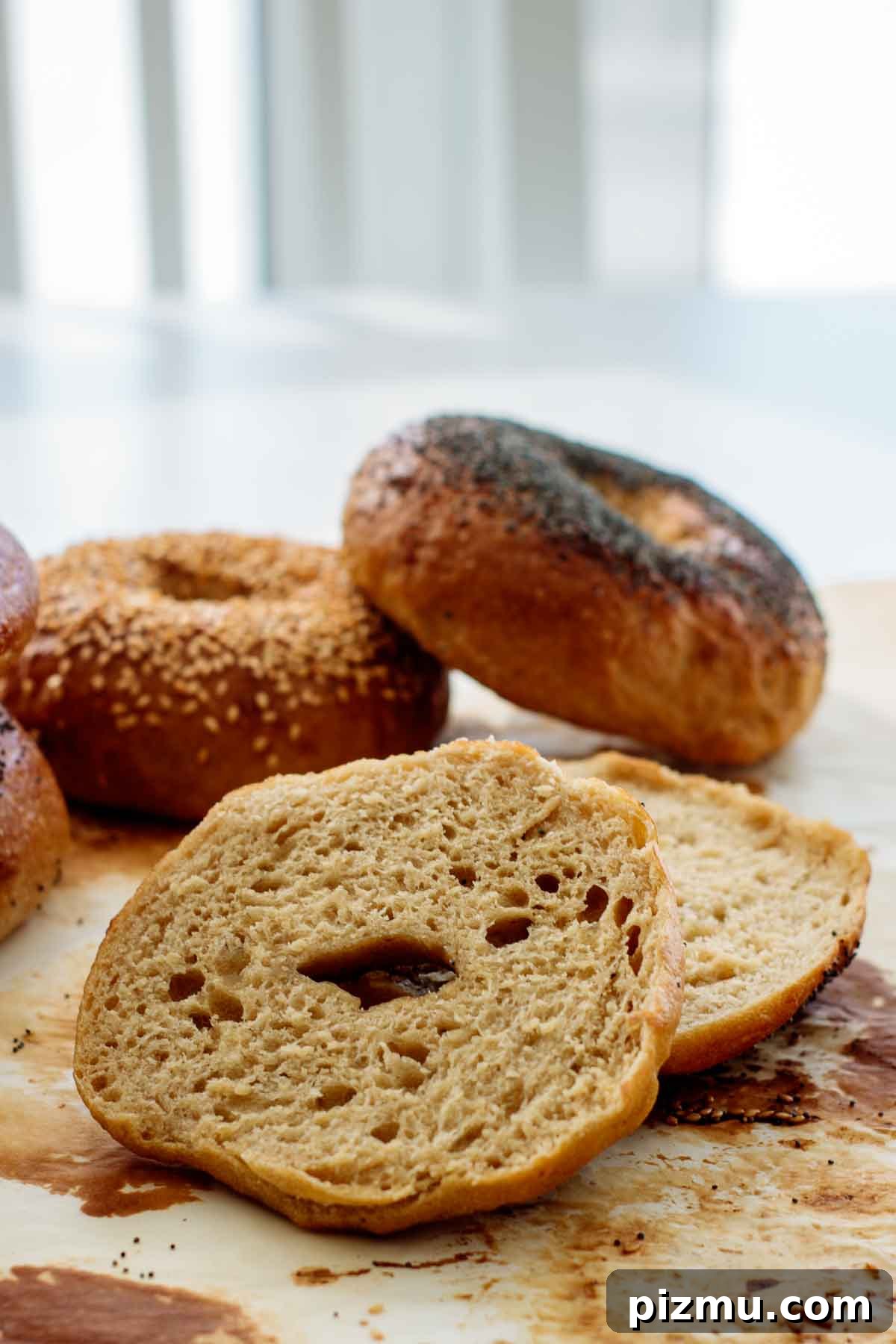
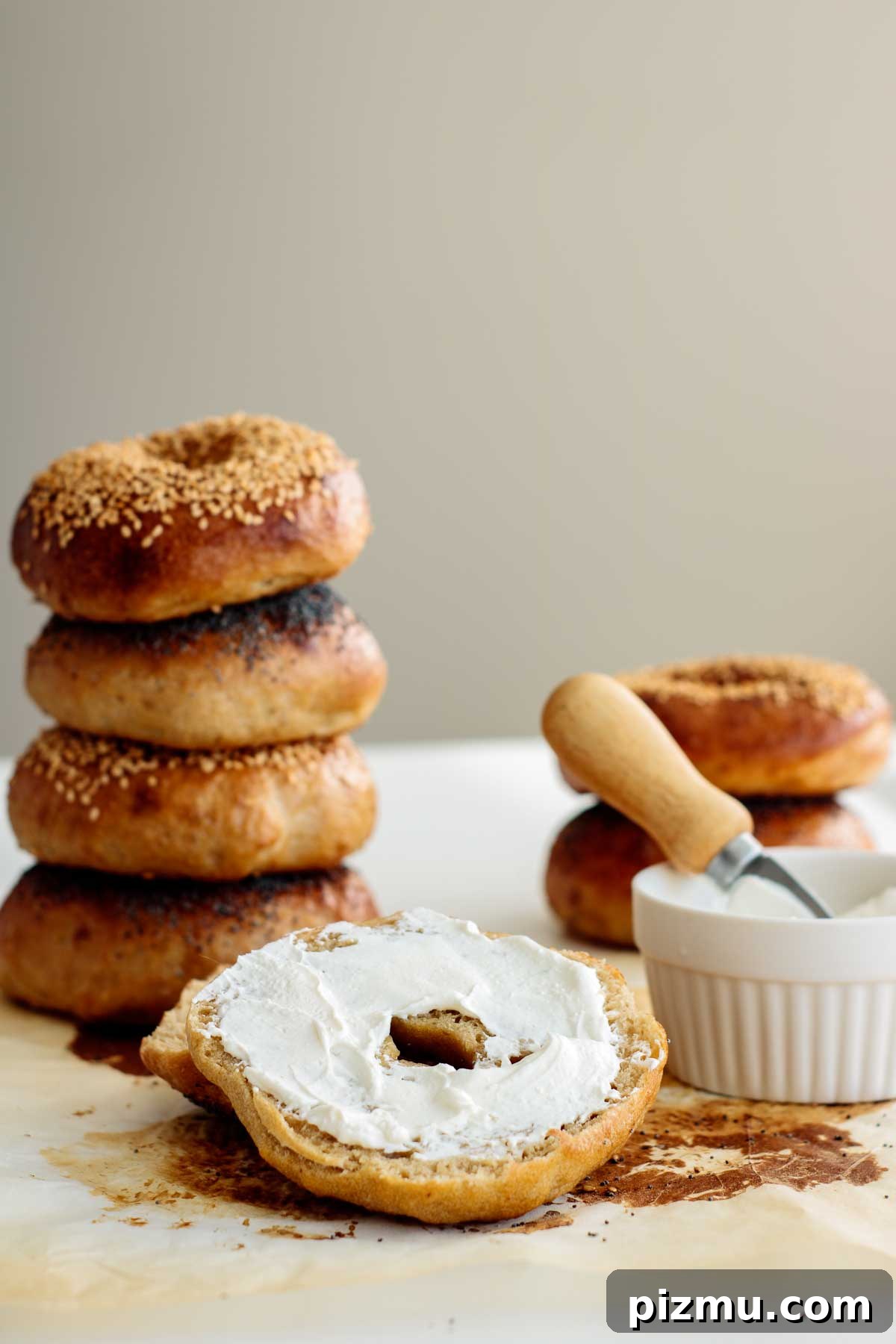
Chewy and crusty, with the deep, tangy flavor only sourdough can provide, these sourdough bagels are worth the extra time. Made with simple ingredients and clear step-by-step instructions, they yield the best homemade bagels you can make at home. Top them with poppy seeds, sesame seeds, everything seasoning, or your favorite topping.
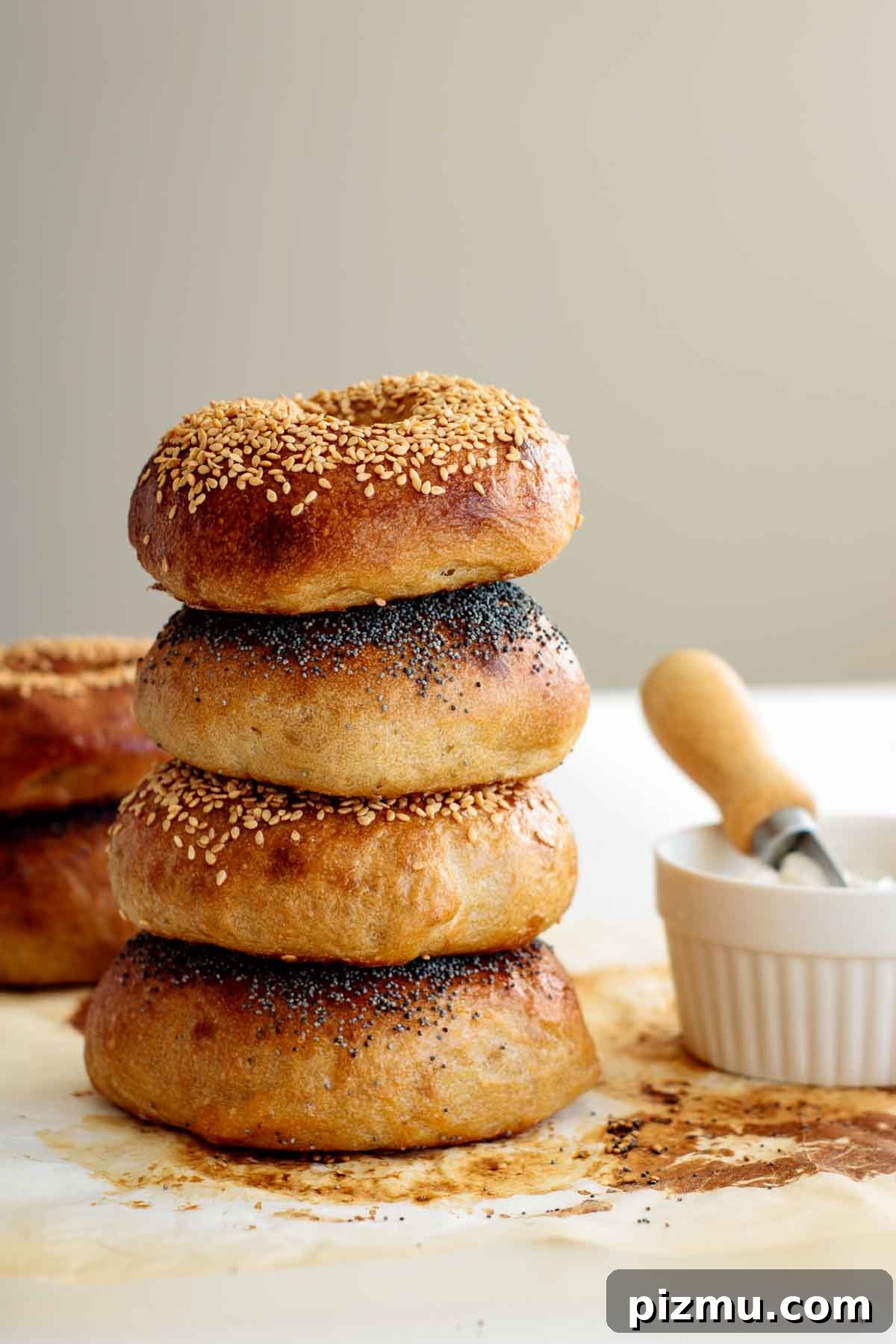
Many home bakers assume bagels are difficult to make. In reality, they only seem complicated until you try them once. After your first batch, you’ll see how approachable they are—and how rewarding. This recipe uses a sourdough starter. If you don’t yet have one, you can grow your own starter before trying this recipe. If you’d prefer not to bake with sourdough, a similar chew and crust can be achieved with a yeast-based bagel or my pumpkin bagel recipe.
Baking Schedule
Here are flexible schedules depending on how you prefer to ferment the dough. The main variables are starter activity, kitchen temperature, and whether you slow fermentation in the refrigerator.
Feeding the starter: Use an active starter at its peak for this recipe. If your starter is very active you may feed it once; otherwise feed it twice before starting so it reaches peak strength.
If refrigerating overnight
Day 1 — Morning: Feed your starter about 6–8 hours before you plan to mix the dough so it peaks in time. Evening: Make the dough and let it ferment at least 1 hour on the counter before placing it covered in the refrigerator.
Day 2 — Morning: Shape the bagels as soon as the dough comes out of the fridge or wait an hour to warm slightly. After shaping they will take 1–3 hours to rise before boiling and baking.
If leaving the dough out overnight (no fridge)
This option suits young or less active starters, but avoid leaving dough out on hot summer nights to prevent overproofing.
Day 1 — Afternoon: Feed your starter about 8 hours before mixing so it peaks by the evening. Evening: Mix the dough and let it ferment at room temperature (do not exceed about 9 hours).
Day 2 — Morning: Shape the bagels; they usually need about 1 hour to puff before boiling and baking.
Start in the morning for dinner
Feed the starter the night before and make the dough in the morning. Shape in the afternoon and bake in the evening for fresh bagels at dinner. All schedules depend on how active your starter is and your kitchen temperature (my kitchen typically stays around 19–21°C).
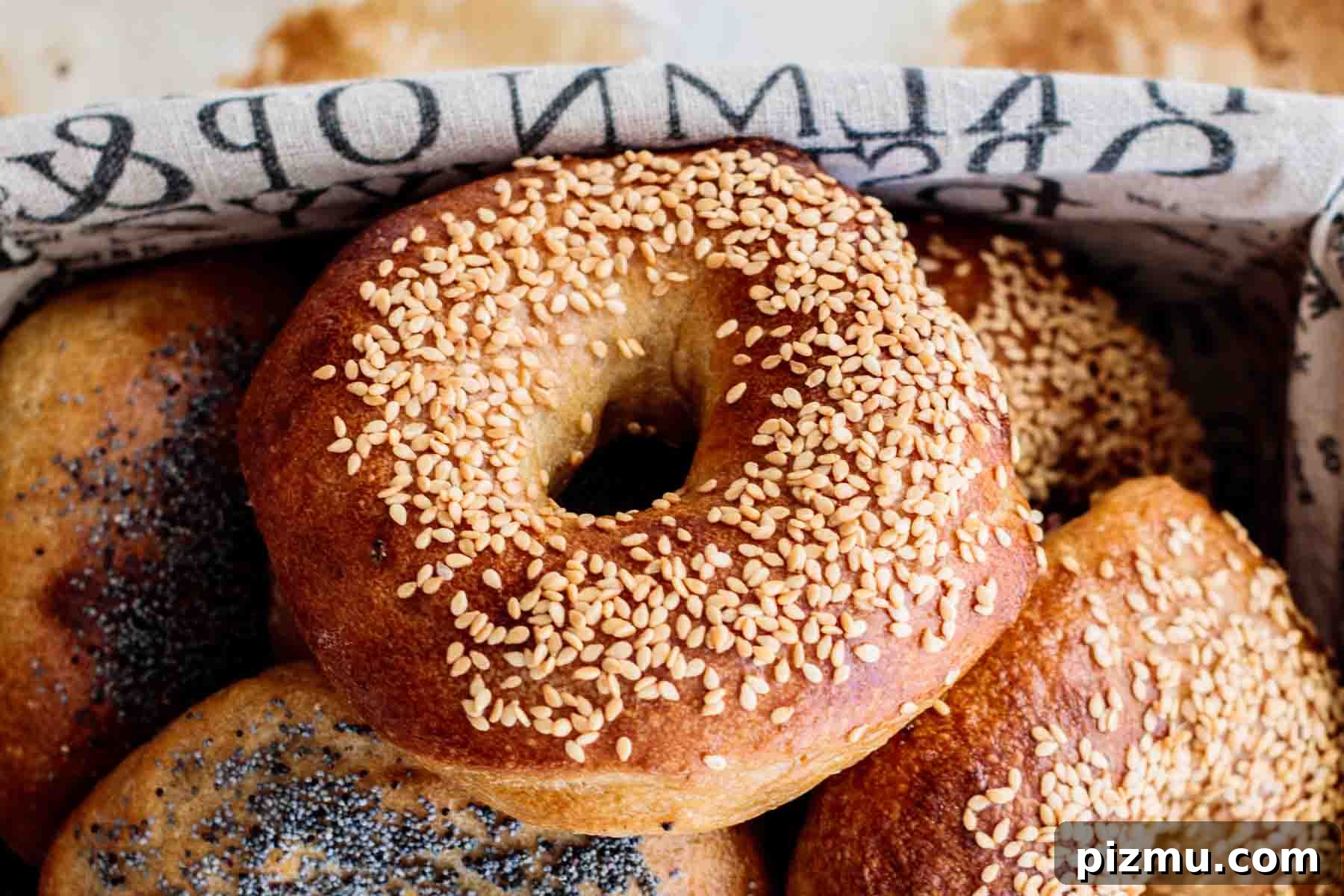
Ingredients and Substitutions
Bread flour. Bread flour gives the bagels their characteristic chew. You can substitute with all-purpose flour, but the texture will be less chewy. Replacing up to half of the white bread flour with whole wheat works well too.
Sourdough starter. Use a well-fed, active starter at its peak. This is particularly important if you plan to refrigerate the dough overnight.
Water. Use filtered, chlorine-free water for best flavor and fermentation.
Salt. Salt is essential for flavor and proper fermentation—fine sea salt works fine.
Molasses and honey. I use molasses and honey together to mimic barley malt flavor. For a vegan option, substitute maple syrup or brown sugar for the honey.
Baking soda and sugar for boiling. Add baking soda and brown or white sugar to the boiling water. Baking soda helps with crust flavor and color; sugar aids caramelization.
How To Get A Stronger Sourdough Taste
If you prefer a tangier sourdough flavor, extend cold fermentation. Storing the dough in the refrigerator for 24–36 hours develops a deeper sour profile without overproofing. Shape and bake after the cold rest as directed.
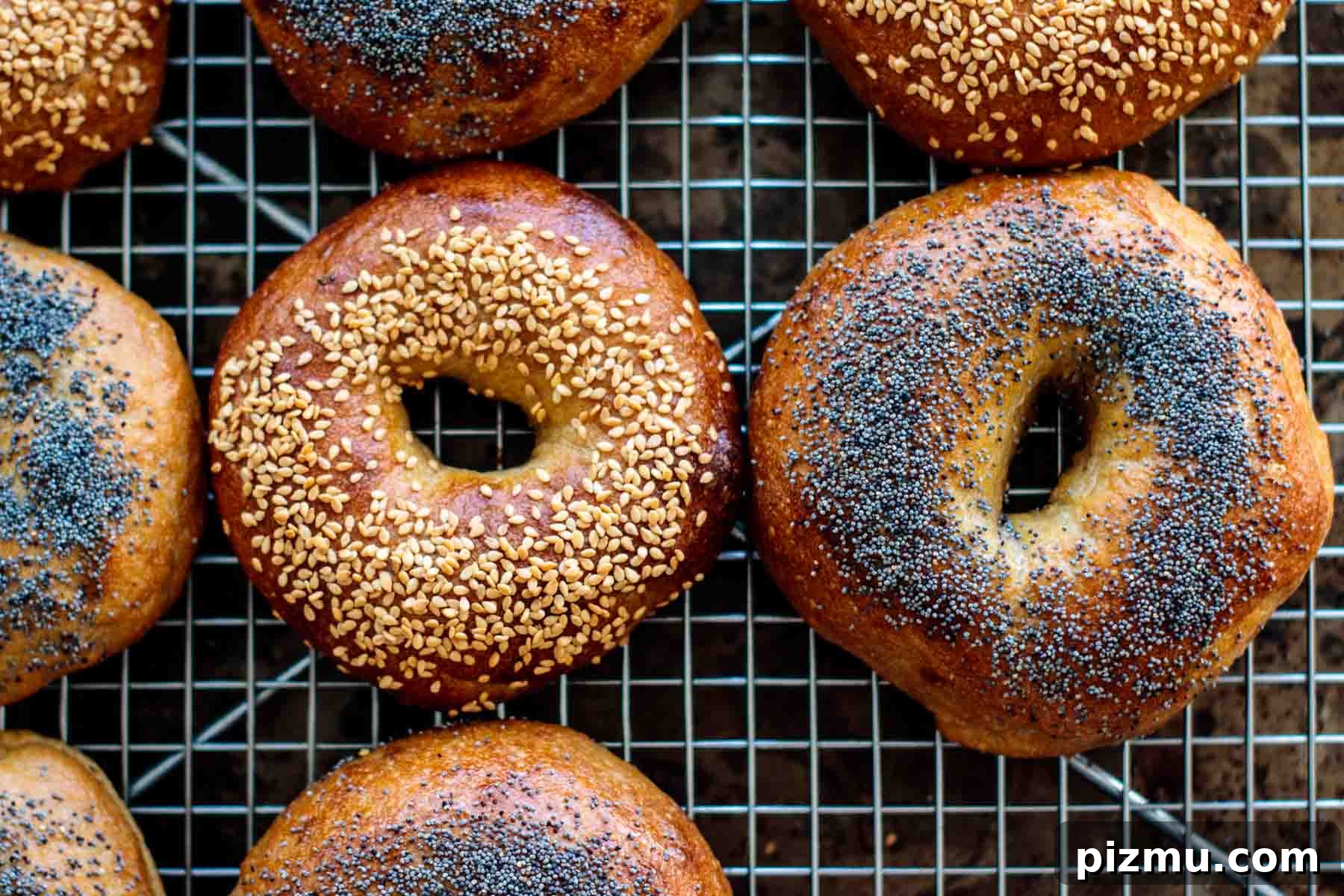
How To Make Them
Follow these steps to make sourdough bagels. Watch a visual guide if you learn better by video, and adjust timing based on your starter and kitchen temperature.
- Feed your starter. Use your starter at peak activity—just before it begins to fall in its jar.
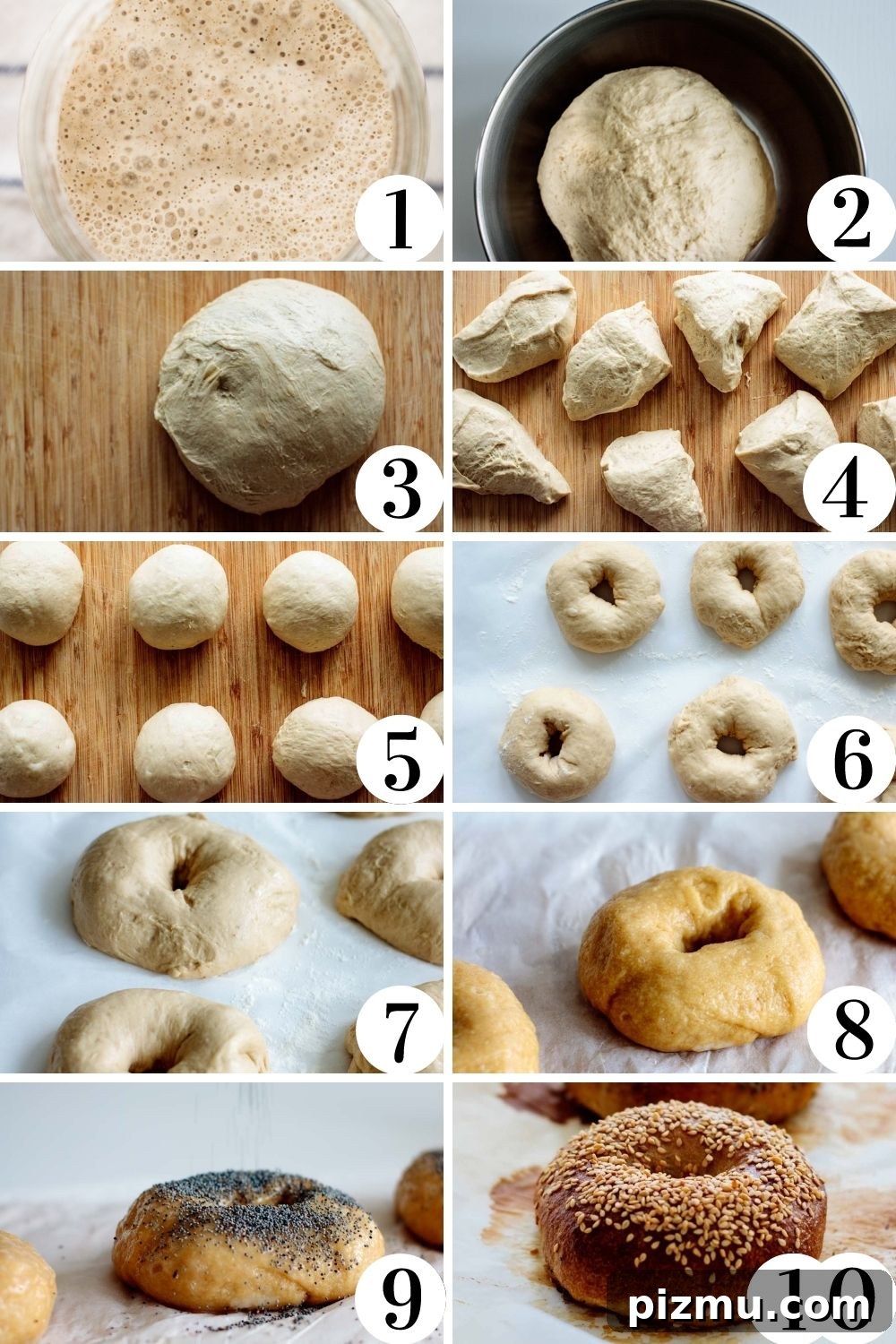
- Mix the dough. Combine flour, salt, water, starter, molasses and honey (or maple) until no dry spots remain. Knead about 5 minutes with a stand mixer or 10 minutes by hand. Transfer to a clean bowl and cover.
- First rise. Let it rise in a warm spot or refrigerate for a slow fermentation. If cold fermenting, cover tightly with plastic or beeswax wrap; a damp towel is not sufficient in the fridge.
- Divide the dough. After the first rise, divide into 8 pieces and let rest 10 minutes.
- Shape into balls. Shape each piece into a tight ball.
- Form the bagels. Poke a hole through the center with your thumb and stretch it wider than the final size; the hole will shrink during rising and baking.
- Second rise. Arrange bagels on a well-floured surface or parchment, leaving room between each. Let them rise until puffy and lighter, usually 1–2 hours depending on temperature and starter activity.
- Boil the bagels. Preheat the oven to 450°F (230°C). Boil a large pot of water with 1 tablespoon baking soda and 1/4 cup sugar (or brown sugar). Gently boil each bagel about 45–50 seconds per side. Avoid letting bagels touch while boiling.
- Top and bake. Transfer boiled bagels to a cooling rack or parchment, add toppings, then bake on a lined sheet pan for about 20 minutes or until golden brown.
Note on deflation: It’s normal for one or two bagels to deflate slightly if you’re new to shaping. They usually still rise and bake up nicely.
Tips For Getting The Best Sourdough Bagel
- Make sure your starter is active and fed—the recipe depends on a lively starter, especially for cold fermentation.
- Your starter should be 100% hydration (equal parts water and flour by weight) for consistent results.
- Use bread flour for better gluten development and chew.
- Prevent the dough surface from drying; in dry climates cover with plastic or beeswax wrap rather than just a towel.
- Make tight dough balls before shaping—the tighter the ball, the easier the final shape will be.
- Flour the surface well where shaped bagels rest so they don’t stick when transferring to boiling water.
- Preheat the oven and heat the boiling water at the same time so both are ready after the second rise and boil.
- If using cup measurements, weigh the flour if possible. If not, spoon flour into the cup and level it off instead of scooping directly.
- Adjust flour slightly in humid conditions—add small increments if the dough is sticky after kneading.
How To Avoid Deflating Your Bagels
Place shaped bagels on a well-floured surface (all-purpose flour or cornmeal). Give each bagel space so they don’t touch during the final rise or during the first seconds of boiling. Handle them gently when transferring to the water.
Why Are Bagels Boiled Before Baking?
Boiling is essential. It sets the crust and gives bagels their distinctive chew and shine. The boil partially cooks the exterior so bagels hold their shape during baking and prevents an overly crusty, cracked exterior that can happen with sourdough alone. Adding baking soda and sugar to the water promotes caramelization for a golden brown crust. Longer boils yield a chewier, thicker crust; shorter boils produce a softer interior. For this recipe, boil about 45–50 seconds per side for a balanced chew and crumb.
Toppings
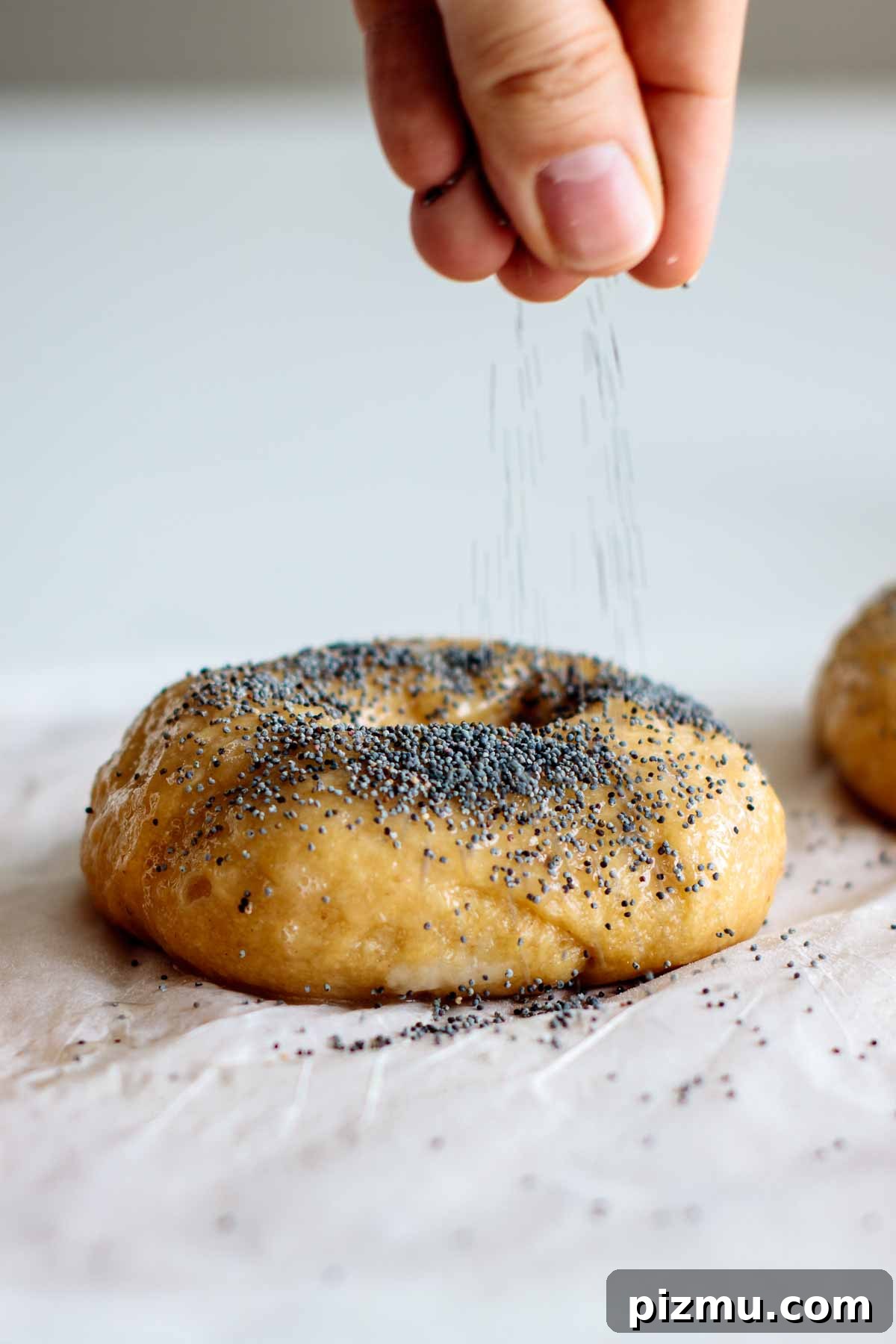
Classic toppings include poppy seeds and sesame seeds, but feel free to experiment:
- Everything bagel seasoning
- Fresh grated parmesan
- Sea salt
- Cinnamon sugar for a sweeter bagel
Do I Need Barley Malt Syrup For Bagels?
Barley malt syrup is traditional and adds a unique flavor, but it isn’t essential. A mix of molasses and honey produces a similar flavor at lower cost. Use maple syrup to keep the recipe vegan.
Storing and Freezing
Bagels are best the day they’re baked but will keep up to five days when stored correctly. After cooling, place in an airtight container, sealable bag, or bread keeper to prevent drying. Do not store bagels in the refrigerator or they will dry out.
To freeze, cool completely, slice in half if desired, then place in a freezer-safe bag and store up to three months. Reheat from frozen by toasting or baking.
If you have questions about this recipe, leave a comment on the original post or revisit these steps and tips.
More Recipes With Sourdough Starter
Sourdough English Muffins; Sourdough French Toast; Basic Sourdough Loaf; Sourdough Pancakes; Sourdough Tortillas.
📖 Recipe
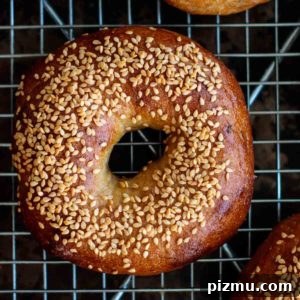
Sourdough Bagels
Author: Tatiana Kamakura
Summary: Chewy and crusty sourdough bagels with deep flavor. Top as you like and bake fresh for the best results.
Prep Time: 10 mins | Cook Time: 20 mins | Additional Time (rise/ferment): ~10 hrs | Total Time: ~10 hrs 30 mins
Servings: 8 bagels | Calories (approx): 309 kcal
Ingredients
- 5 cups (650 g) bread flour
- 1/2 cup (120 g) active sourdough starter
- 1 cup (240 g) water
- 1 tsp (6 g) salt
- 1 tbsp (20 g) molasses
- 1 tbsp (20 g) honey (or maple syrup for vegan)
- Water for boiling (about 1 gallon, depending on pot size)
- 1 tbsp baking soda
- 1/4 cup sugar (brown or white)
Instructions
- Feed your starter so it’s active and at its peak before beginning.
- Mix flour, salt, water, starter, molasses and honey/maple syrup until combined. Knead 5 minutes in a stand mixer or about 10 minutes by hand.
- Cover the dough and allow a first rise in a warm spot or refrigerate for a slow, overnight fermentation (up to 36 hours refrigerated).
- After rising, divide the dough into 8 pieces and rest 10 minutes. Shape each into a tight ball.
- Poke a hole through each ball and stretch into a ring larger than the desired size to allow for shrinkage.
- Let bagels rise until puffy and lighter—usually 1–2 hours depending on temperature and starter activity.
- Preheat the oven to 450°F (230°C). Bring a large pot of water to a boil and add baking soda and sugar.
- Boil each bagel 45–50 seconds per side (work in small batches). Remove, drain briefly, add toppings, and transfer to a lined sheet pan.
- Bake for about 20 minutes or until golden brown on top. Cool slightly before slicing and serving.
Notes
For a stronger sourdough taste, extend the cold fermentation to 24–36 hours. If your starter or kitchen is less active or warm, adjust fermentation times accordingly.