
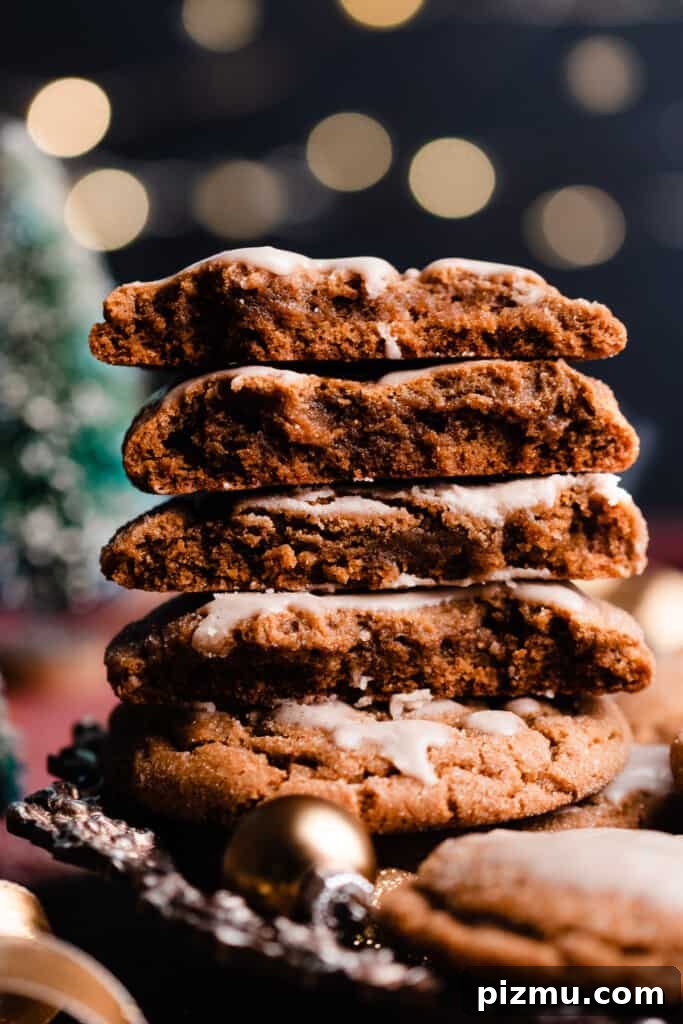
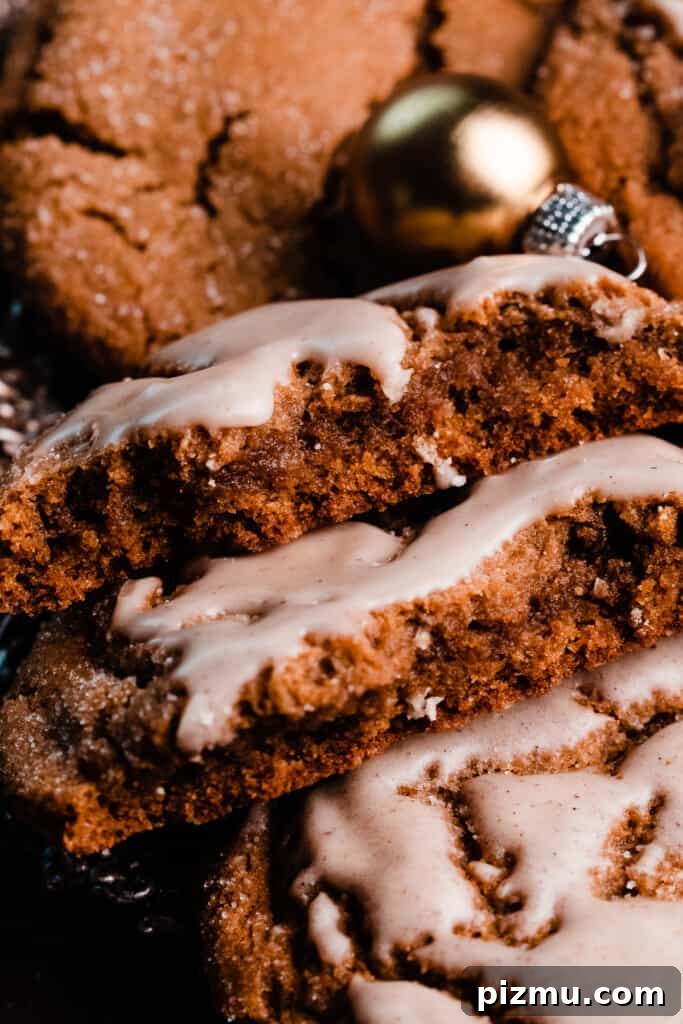
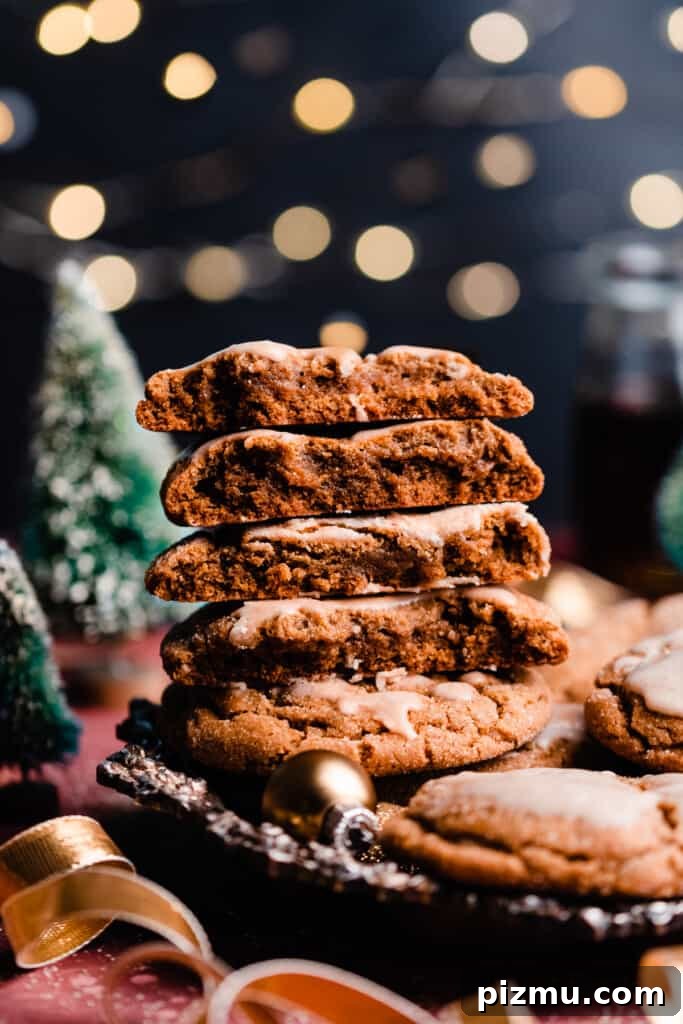
Molasses Cookies are thick and chewy with a crinkled top and crisp edges. These cookies get deep, warming flavor from generous amounts of ginger, molasses, brown butter and dark brown sugar. Finish them with a silky maple glaze for a polished touch — they’re perfect for holiday cookie plates or any cozy afternoon treat.

The scent of molasses and ginger is almost synonymous with the holiday season. These cookies bake up chewy inside with a crackly top and caramelized edges. They’re straightforward to make and reward you with impressive flavor — let’s get into why they’re worth baking.
Why you’ll love these Ginger Molasses Cookies
- Thick and Chewy: The texture is intentionally soft and substantial, with a crisp outer edge and a tender center. Brown butter and dark brown sugar deepen the flavor.
- Simple Method: No mixer is required — the dough comes together in one bowl. Chill time is reasonable and optional shortcuts are available.
- Optional Maple Glaze: A quick maple glaze elevates the cookies and adds a glossy finish that’s both festive and delicious.
Ingredient Overview
The full ingredient list and step-by-step instructions appear in the recipe section below.
- Butter: Salted butter is recommended for flavor; use unsalted if you prefer, adjusting salt as needed.
- All-purpose flour: For best results spoon and level the flour into a measuring cup or weigh with a scale to avoid a dry cookie.
- Molasses: Use dark or unsulphured molasses rather than blackstrap, which is bitter. Dark molasses gives the signature taste and color.
- Dark brown sugar: Adds depth and moisture. It’s preferred here, but light brown sugar can be used if that’s what you have.
- Spices: Ground ginger is the star, supported by cinnamon and a touch of nutmeg for warmth.
Ingredient Substitutions
- Dairy-free: Substitute dairy-free butter to make these cookies dairy-free.
- Gluten-free: A cup-for-cup gluten-free flour often works in cookie recipes; this recipe has not been extensively tested with gluten-free blends, so results may vary.
How to Make Molasses Cookies
Step 1 — Brown the Butter (optional): Browning butter adds a nutty caramel flavor that complements molasses. Melt and cook butter over medium-low heat until it turns golden with aromatic brown bits, then cool slightly.
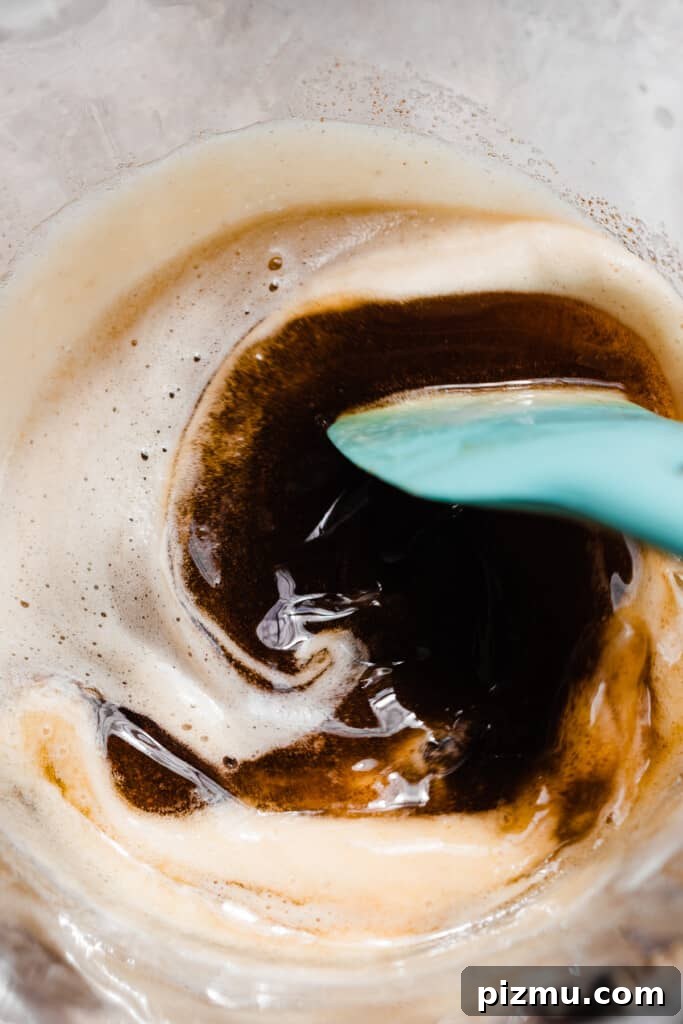
Step 2 — Make the Dough: Whisk the cooled brown butter (or melted and cooled regular butter) with molasses, then add dark brown sugar and granulated sugar. Add eggs and vanilla, then fold in the dry ingredients until a homogeneous dough forms. Scrape the bowl so no dry flour remains.
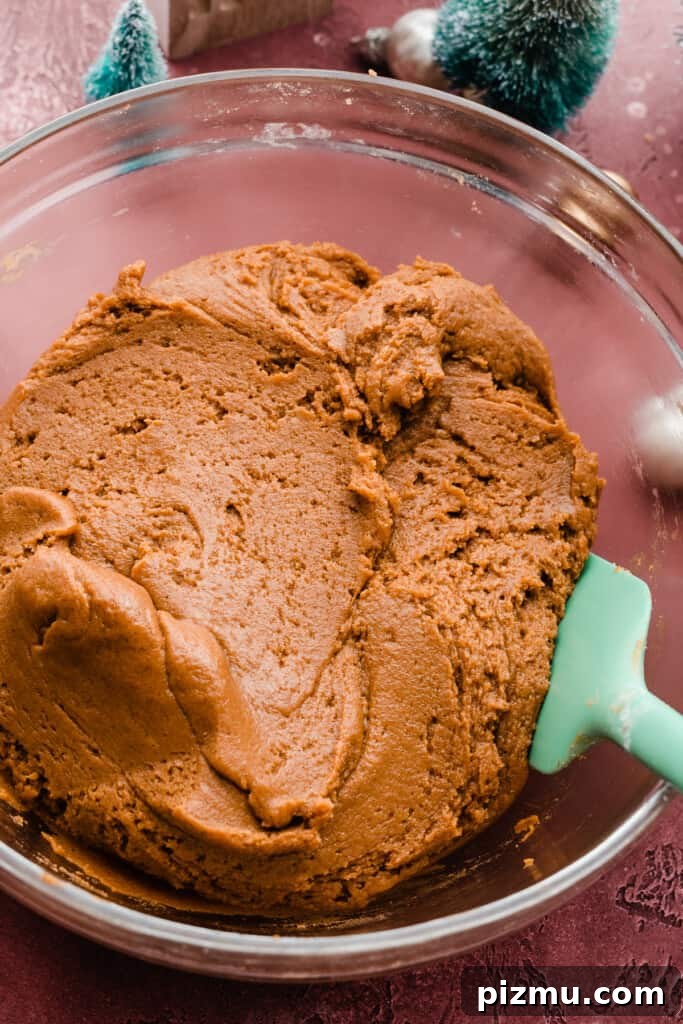
Step 3 — Scoop and Chill: Portion dough into rounds (about 70 grams each for large cookies, or 35–40 grams for smaller cookies). Chill on a baking sheet in the freezer for at least 30 minutes or in the fridge for 2 hours to help control spreading.
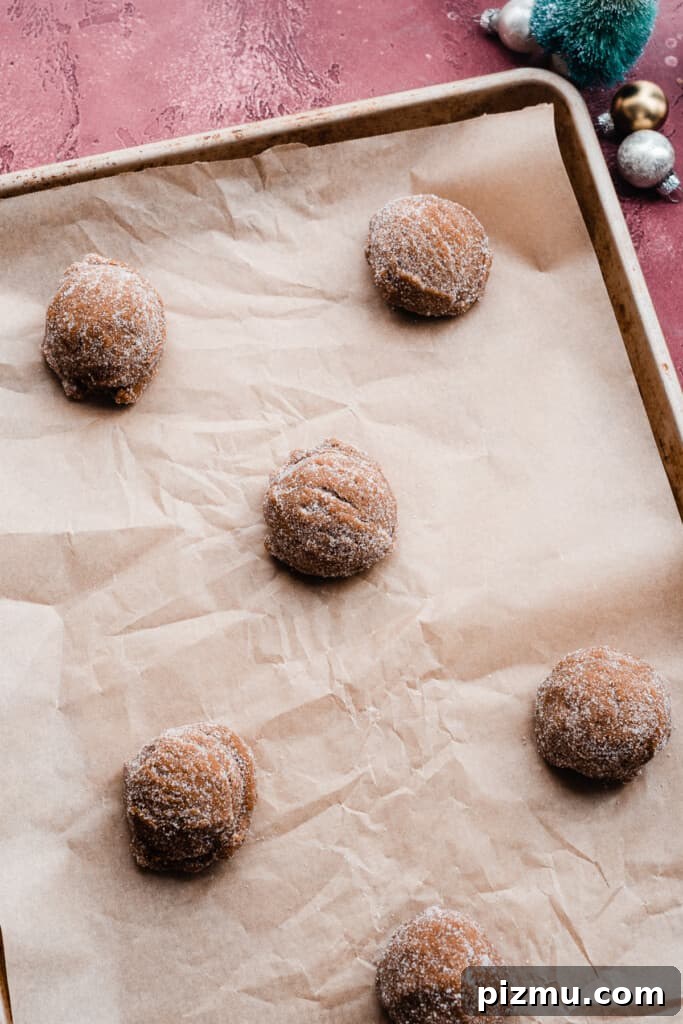
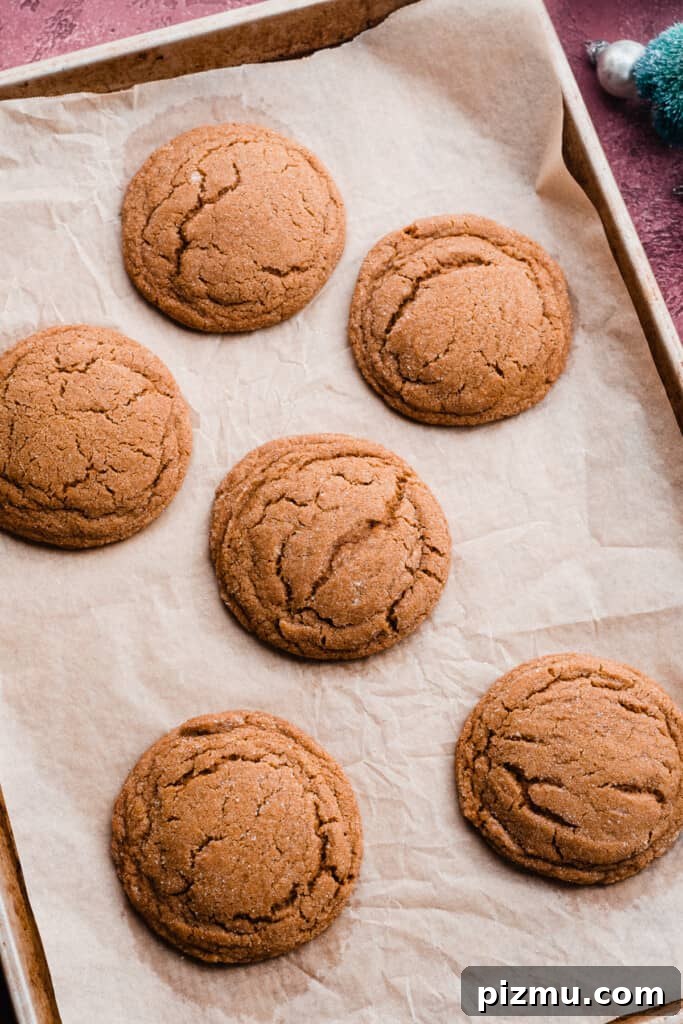
Step 4 — Bake: Roll chilled dough balls in granulated sugar, space them on parchment-lined sheets (5–6 per sheet depending on size) and bake at 365°F for about 12–13 minutes for the larger size, or 8–10 minutes for smaller cookies. They will look puffy when they come out but will settle as they cool. Use a round cutter immediately after baking to nudge each cookie into a perfectly rounded shape if desired.
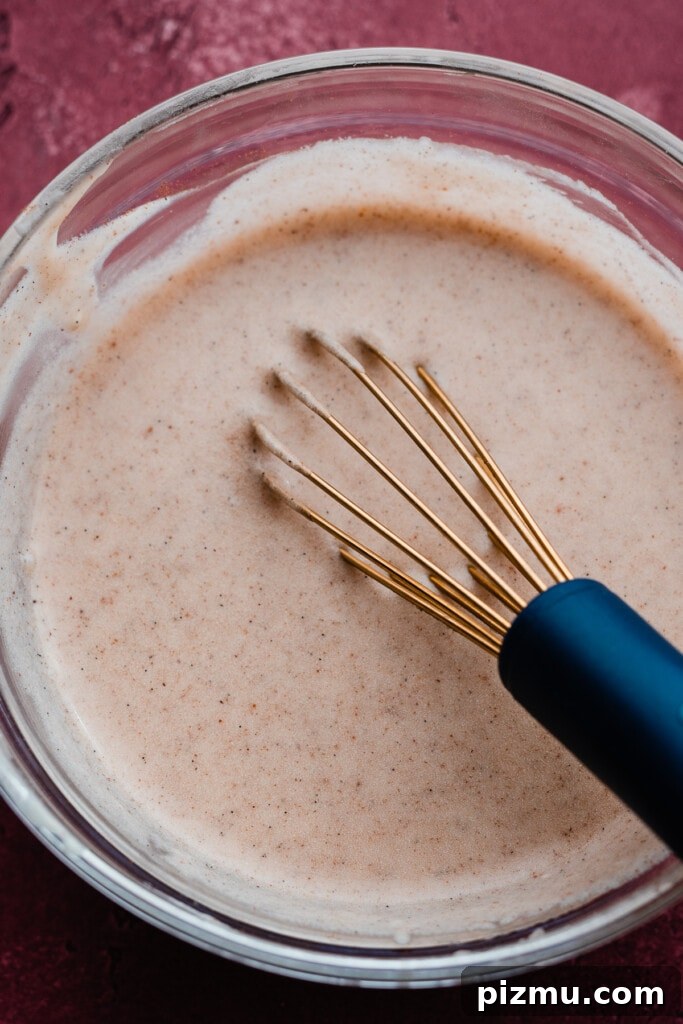
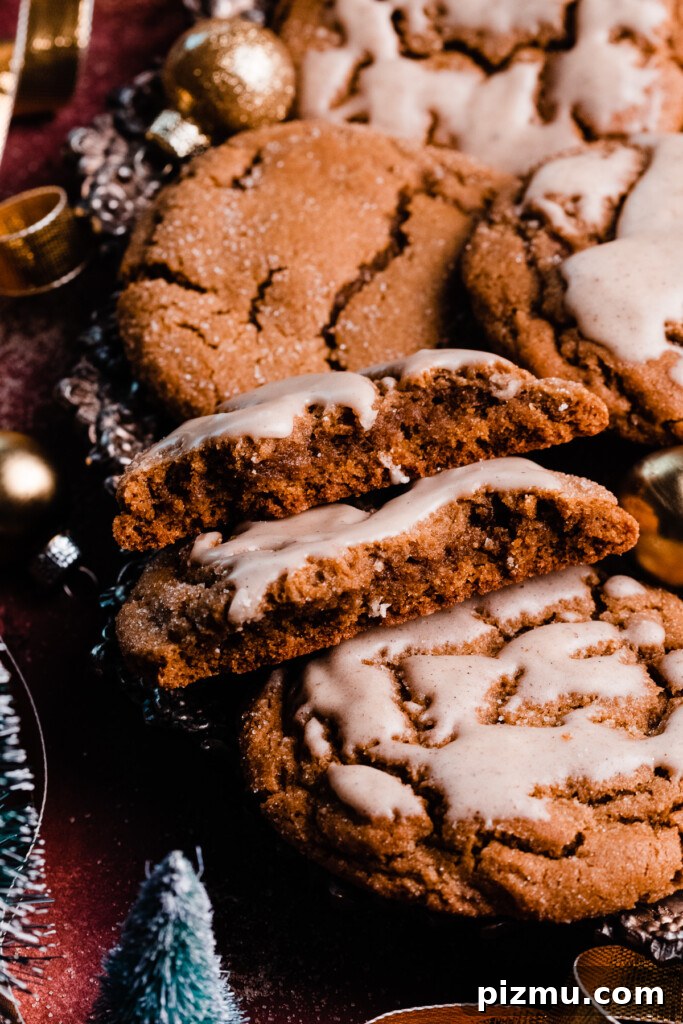
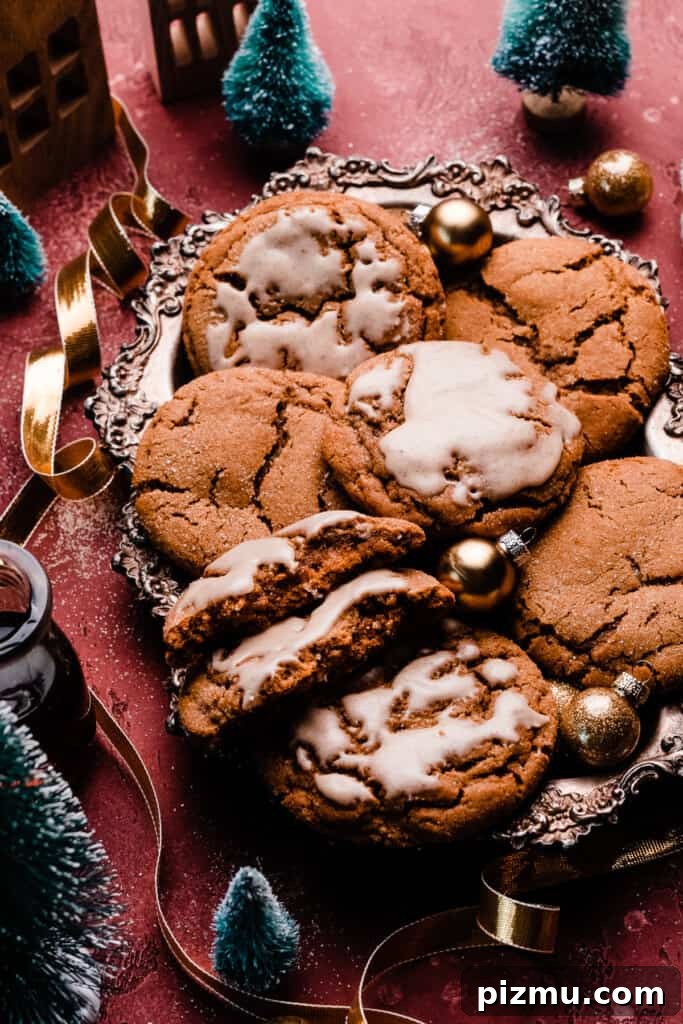
Step 5 — Maple Glaze (optional): Whisk powdered sugar with maple syrup, a pinch of cinnamon, vanilla and a splash of milk to reach a drizzleable consistency. Spoon or dip the warm or cooled cookies in the glaze and allow it to set.
Serving and Storing
Serve the cookies warm or at room temperature. Let them cool completely before transferring to an airtight container. Cookies with glaze will keep in the refrigerator for 5–7 days; unglazed cookies can be stored at room temperature for 4–5 days.
Expert Success Tips
- Check oven temperature: An oven thermometer helps ensure your oven is accurate. Inconsistent oven temperature can affect spread and bake time.
- Weigh flour: Using a kitchen scale yields more consistent results than measuring by volume, which varies by technique and cup style.
FAQs
Can I freeze this cookie dough? Yes. Freeze dough balls on a lined sheet tray until solid, then transfer to a freezer-safe container for up to two months. Bake from frozen, adding 1–2 minutes to the bake time. Dough balls can also be refrigerated for 2–3 days before baking.
Why did my cookies spread too much? If cookies become thinner than expected, common causes are insufficient chilling, an inaccurate oven temperature, or old leavening agents. Chill dough and verify baking temperature.
How do I get perfectly round cookies? Right after baking, place a round cutter around the edge of each cookie and gently swirl or “scoot” the cookie into the cutter to form a neat circle and help the cookie appear thicker.
Recipe Variations
- Skip brown butter: For a quicker approach, melt the butter without browning. The cookies will still be tasty and will bake reliably.
- Skip the glaze: These cookies are excellent plain; the glaze is optional and adds sweetness and shine.
Special Tools
- Baking sheets: Rugged, even-heating cookie sheets help cookies bake evenly.
- Kitchen scale and cookie scoop: A scale ensures consistent portioning; a scoop speeds up shaping.
- Round cutters: Useful for nudging cookies into perfectly round shapes immediately after baking.
More perfect Christmas cookies to love
- Cinnamon Roll Snickerdoodle Cookies
- Frosted Sour Cream Cookies (chewy, not cakey)
- Double Chocolate Peppermint Bark
- Black Forest Chocolate Truffles
- Best Soft Gingerbread Cookies
Did you make this recipe? Leave a comment and rating below!
Your feedback helps improve the recipe and supports small food creators.

Chewy Brown Butter Molasses Cookies
Ingredients
For the Molasses Cookies
- 14 tbsp salted butter (200 g before browning, about 156 g after browning)
- 1/3 cup + 1 tbsp molasses (130 mL)
- 3/4 cup dark brown sugar (163 g)
- 3/4 cup granulated sugar (156 g)
- 2 large eggs, room temperature
- 1 1/2 tsp vanilla extract
- 3 1/4 cups all-purpose flour, spooned and leveled or weighed (423 g)
- 1 tsp baking powder
- 1 tsp baking soda
- 1/2 tsp salt
- 2 tsp ground ginger
- 1 1/2 tsp cinnamon
- 1/4 tsp nutmeg
- Extra granulated sugar for rolling
For the Maple Glaze
- 3 tbsp maple syrup (60 g)
- 1 cup + 1 tbsp powdered sugar (130 g)
- Pinch of cinnamon
- 1/4 tsp vanilla extract
- Milk as needed to thin the glaze
Instructions
- Brown the butter (optional): Melt butter in a saucepan over medium heat, then reduce to medium-low and stir frequently until it turns a deep golden color and smells nutty, about 4–6 minutes after melting. Pour into a bowl and cool in the freezer for about 40 minutes while you prepare other ingredients.
- Make the dough: Add cooled brown butter (or melted and cooled regular butter) to a large bowl and whisk in molasses. Add sugars and whisk until combined. Add eggs and vanilla and whisk until smooth. Stir in the dry ingredients just until a dough forms, scraping the bowl so no dry flour remains.
- Scoop and chill: Portion dough into 70 g balls (about 3.5 tbsp) for large cookies, or 35–40 g for smaller cookies. Chill in the freezer for at least 30 minutes or in the fridge for at least 2 hours. Smaller 40 g balls will yield about 26 cookies and bake 8–10 minutes.
- Bake: Preheat oven to 365°F (185°C). Line baking sheets with parchment. Roll chilled dough balls in granulated sugar and place 5–6 per sheet with room to spread. Bake for 12–13 minutes for large cookies (8–10 for smaller). Cookies should look puffy with crinkled tops; they will settle as they cool. If desired, press a round cutter gently around each cookie immediately after baking and swirl to shape them into neat circles.
- Make the glaze: Whisk together maple syrup, powdered sugar, cinnamon and vanilla. Add milk a little at a time until the glaze reaches a drizzleable consistency. Drizzle or dip warm or cooled cookies in the glaze and let it set.
- Serve and store: Enjoy immediately or let the glaze firm up. Store glazed cookies in single layers in an airtight container in the refrigerator for 5–7 days. Unglazed cookies keep at room temperature in an airtight container for 4–5 days.
- Make-ahead tips: Freeze scooped dough balls on a sheet tray until firm, then transfer to a freezer-safe container for 1–2 months. Bake from frozen and add 1–2 minutes to the bake time. Dough balls can also be refrigerated for 2–3 days before baking.
Notes
About brown butter: Browning butter evaporates some water, so start with more butter (14 tbsp) to end up with the desired amount (about 11 tbsp / 156 g) after browning. If you skip browning, use 156 g (11 tbsp) of salted butter.
Brown sugar: Dark brown sugar adds more depth in this recipe, but light brown sugar may be substituted if needed.
Nutrition
Serving: 1 cookie — Calories: 349 kcal; Carbohydrates: 58 g; Protein: 4 g; Fat: 12 g; Saturated Fat: 7 g; Sugar: 37 g. Nutrition values are approximate.