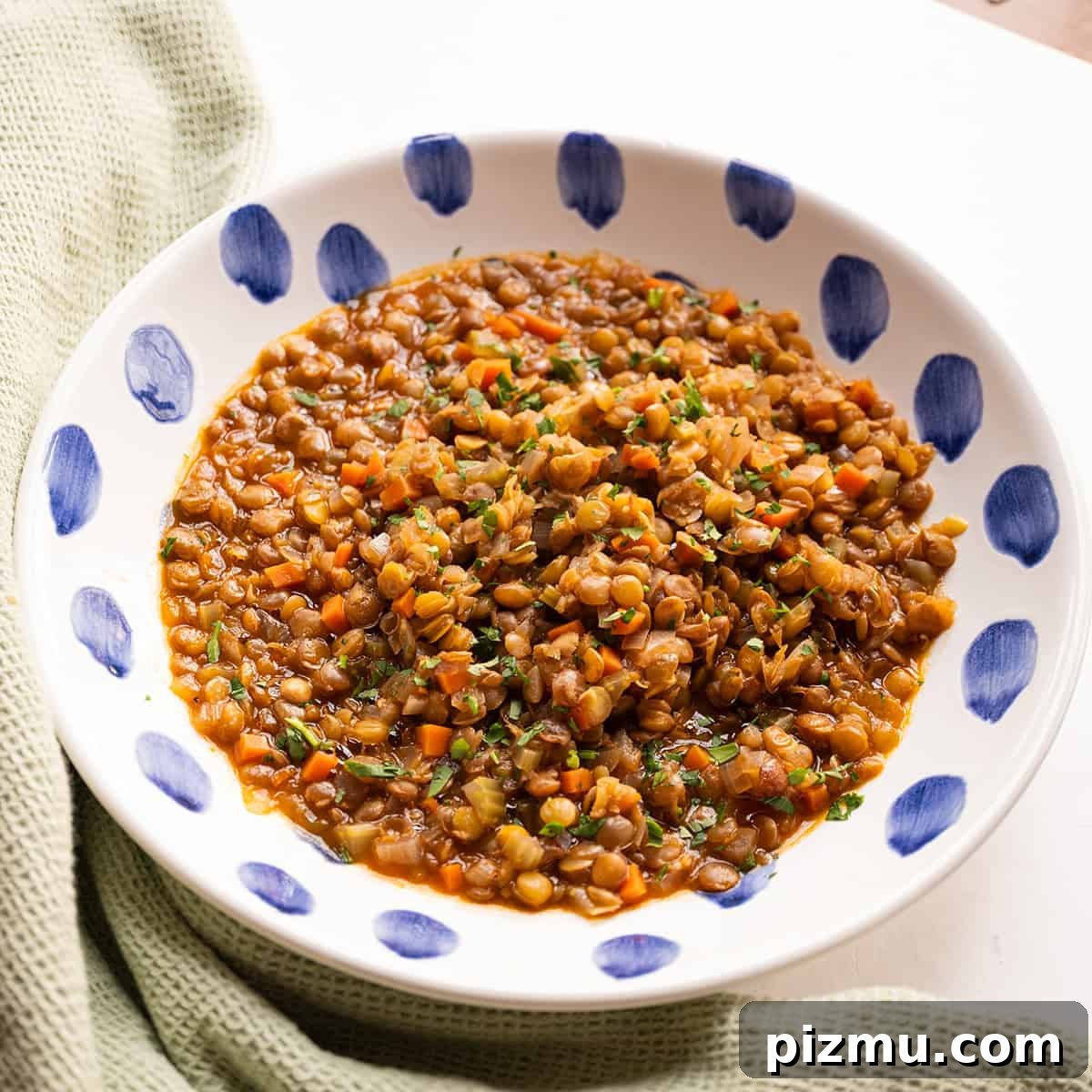
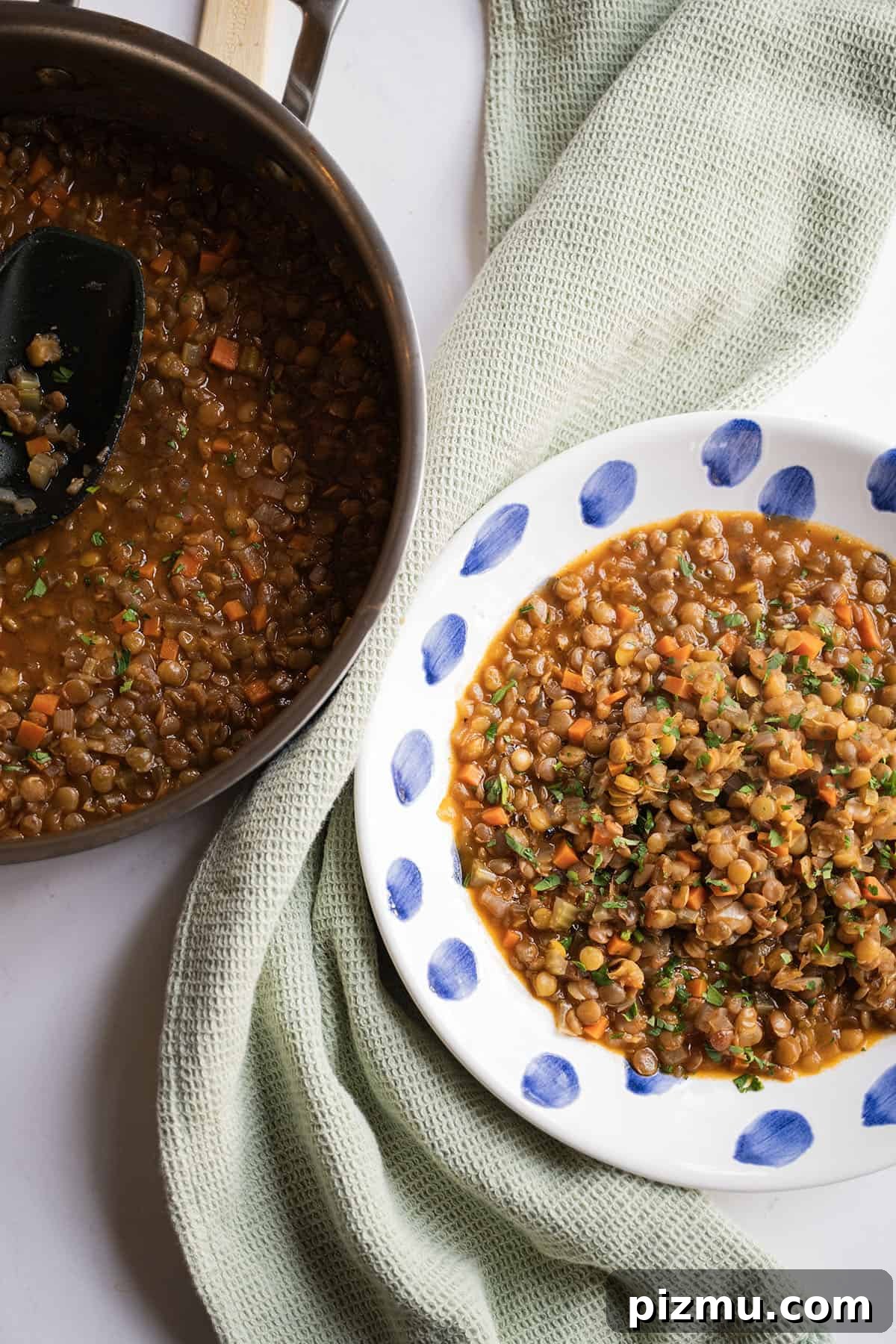
A delicious Italian classic to welcome the New Year. In Italy, lentils are served on New Year’s Day as a symbol of good luck and prosperity. These stewed Italian lentils are hearty, full of vegetables, and simple to prepare. Serve them as a flavorful side dish—or enjoy them as a light main—alongside crusty bread to soak up the savory sauce.
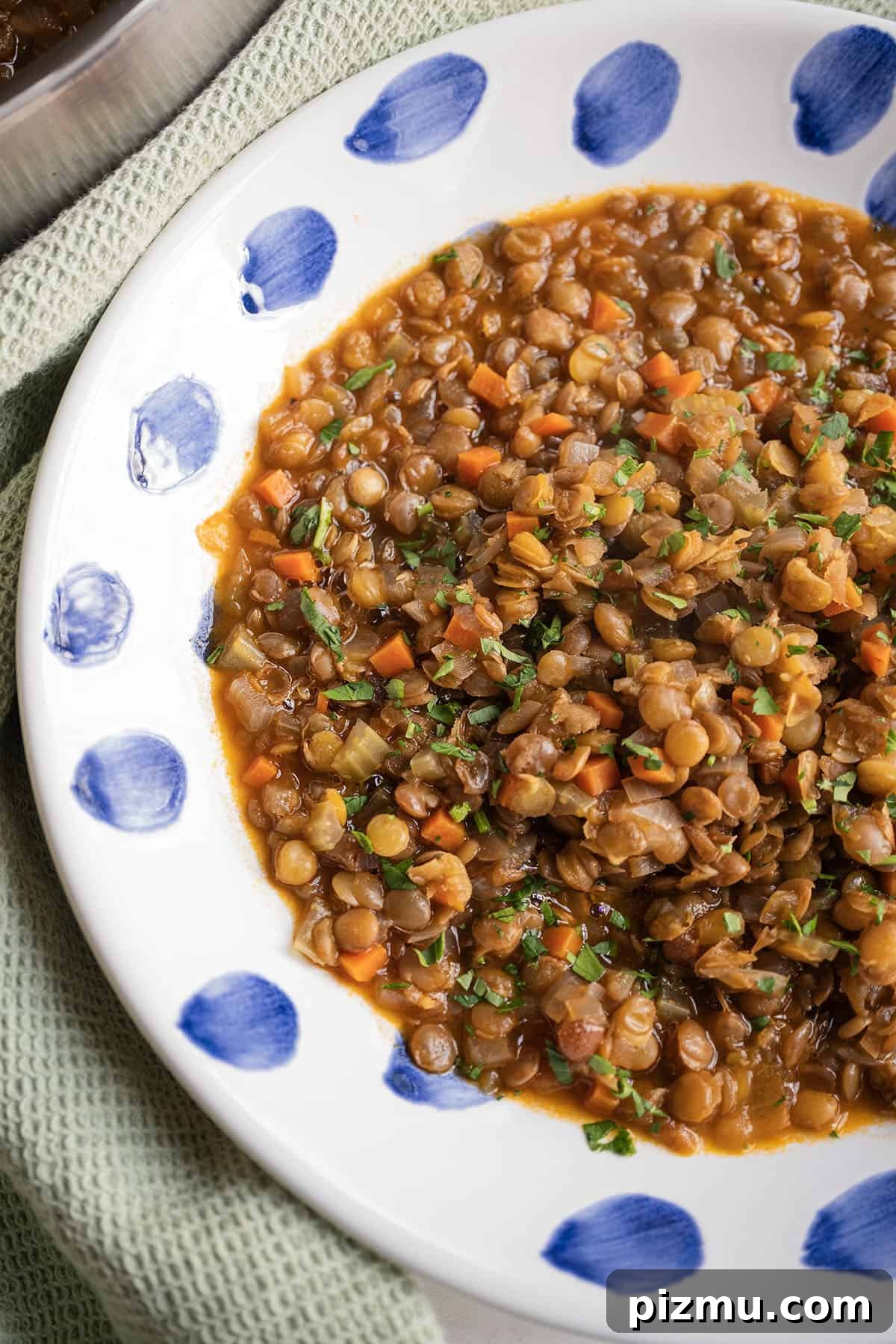
Italian Lentils for the New Year
Lentils have long been associated with luck and prosperity in Italian tradition. The small, coin-like legumes were once placed in little pouches and exchanged as symbolic gifts, and many families still serve lentils on New Year’s Day to invite good fortune for the months ahead.
Beyond folklore, this recipe is a reliably tasty, vegetable-forward dish that’s easy to make any time of year. The lentils are simmered with aromatic mirepoix (carrots, celery, onion), tomato paste for depth, and a splash of red wine to build complexity. The finished dish is comforting, nutritious, and versatile—excellent with chicken, pork, sandwiches, or simply with rustic Italian bread.
Ingredient Notes and Substitutions
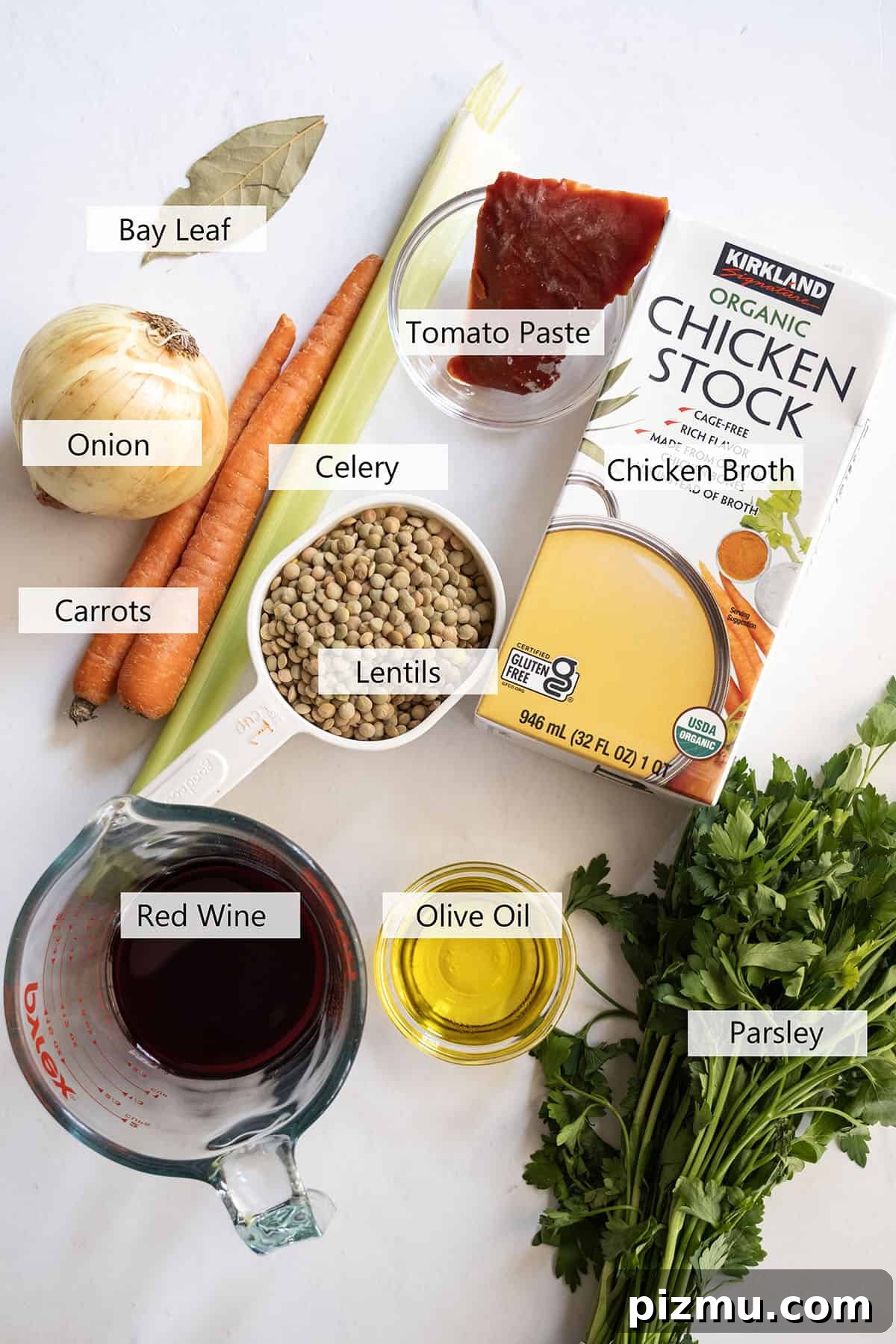
- Lentils: Green lentils are used here for their firm texture and slightly nutty flavor. Brown lentils work well too; red lentils cook faster and break down into a softer, puree-like texture, which is ideal for soups but less so for a stewed side.
- Red wine: A medium- to full-bodied red (for example Merlot or Cabernet-style) adds richness. The wine is cooked down so the alcohol evaporates and the flavor concentrates; omit it or replace with extra broth if you prefer not to use alcohol.
- Tomato paste: Browning the tomato paste in the pan adds a roasted, slightly sweet tomato note that deepens the overall flavor.
- Vegetables: The base includes carrots, onion, and celery. You can add mushrooms, diced zucchini, or leafy greens near the end of cooking if desired.
See the recipe card below for exact measurements, times, and the full ingredient list.
How to Make Italian Lentils
This recipe is forgiving: you can start it in the morning and keep it at a low simmer for a couple of hours, topping up with a little extra broth if it begins to dry. The method focuses on developing flavor in three stages—sauté the aromatics, caramelize the tomato paste, and concentrate flavor with wine before finishing the lentils in broth.
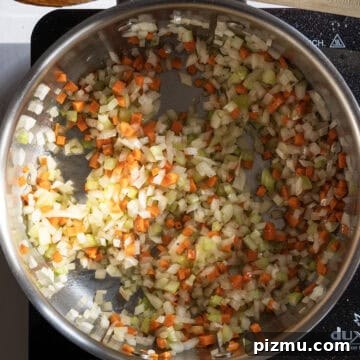
Step 1: Heat olive oil in a large saucepan over medium heat. Add finely chopped carrots, celery, and onion and sauté until soft, about 8 minutes. This draws out natural sugars and builds flavor.
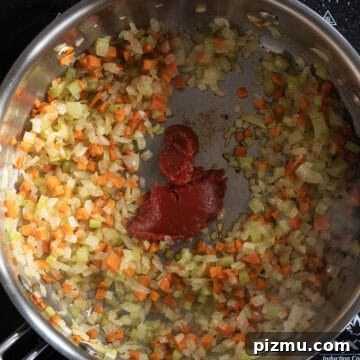
Step 2: Spoon the tomato paste into the pan where it can touch the hot surface and let it sit for a minute or two to caramelize. Then stir it into the vegetables and season with salt and pepper.
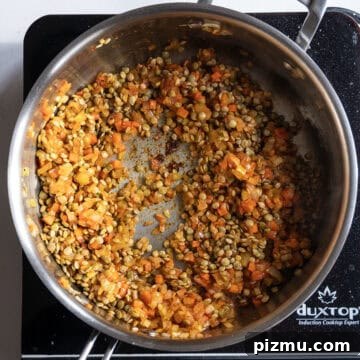
Step 3: Add the dry lentils and toss to coat with the aromatic mixture. Pour in the red wine and simmer until the wine is absorbed, which concentrates the flavor and reduces any harshness.
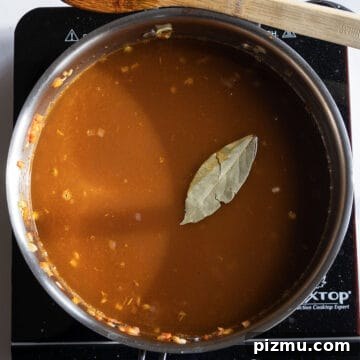
Step 4: Add chicken (or vegetable) broth and a bay leaf. Bring to a boil, then reduce to a gentle simmer, cover, and cook until the lentils are tender, about 25 minutes. Adjust seasoning and add chopped parsley just before serving.
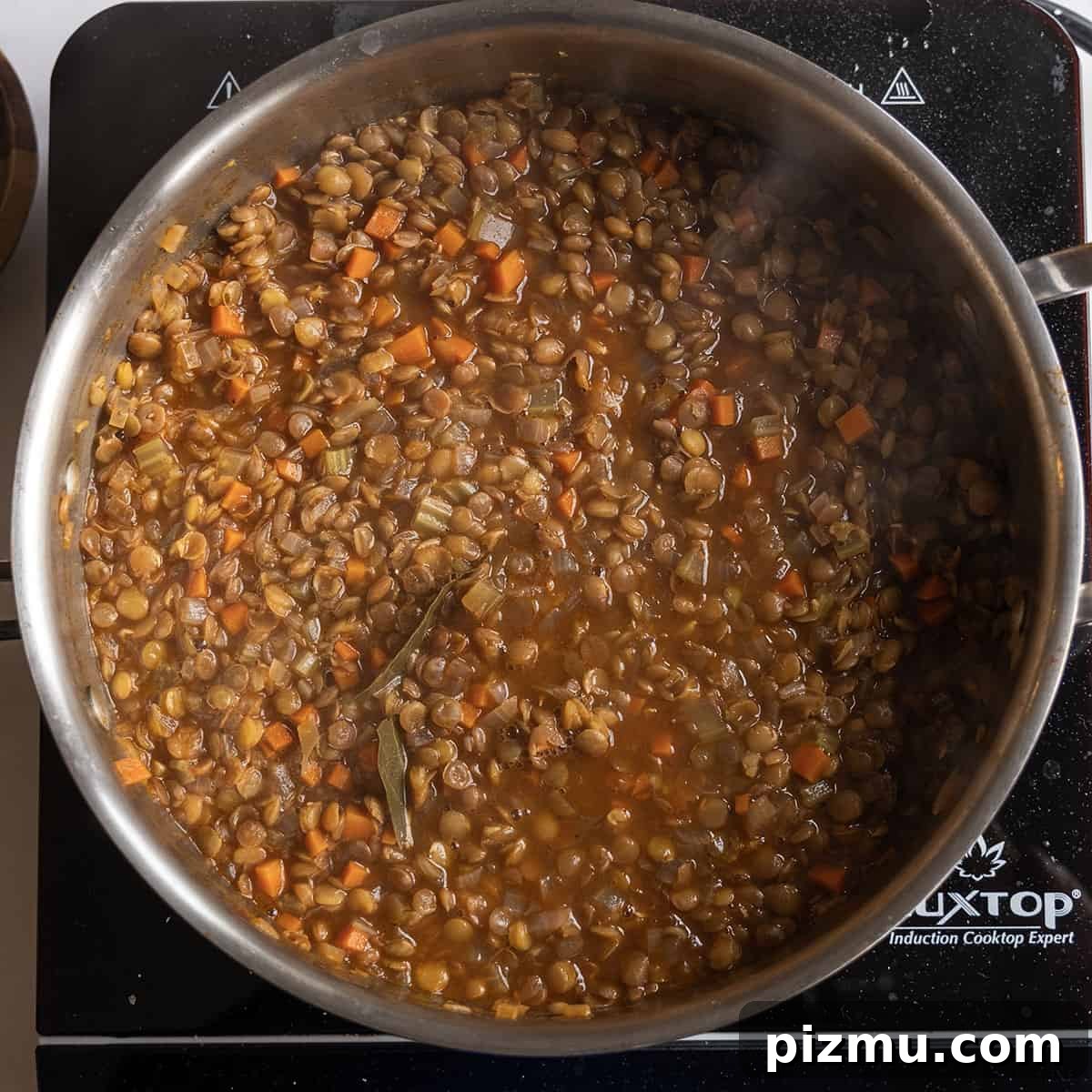
Serving: Remove the bay leaf and serve hot with crunchy Italian bread for dipping. These stewed lentils pair well with roasted or grilled meats, sausages, or as a hearty accompaniment to sandwiches and salads.
Pro Tips
- Sauté the vegetables until soft to develop sweetness and depth.
- Caramelize the tomato paste directly on the pan surface to increase its intensity and add a subtle roasted flavor.
- Allow the lentils to absorb the wine fully before adding the broth so the wine flavor is concentrated and smooth.
- Always have good bread on hand—it’s essential for soaking up the flavorful cooking liquid.
Recipe FAQs
Lentils are traditionally associated with money and prosperity because their shape resembles small coins. Serving lentils on New Year’s Day is a symbolic gesture meant to attract good fortune for the coming year.
Common names include “lenticchie in umido” (stewed lentils) or simply “lenticchie.” In some regions lentils are served with specific sausages or pork preparations.
Yes. For a soupier result, add more broth and cook a bit longer. To keep the lentils drier, reduce the broth by ½ to 1 cup or skip the wine. Adjust to your preferred consistency.
What to Serve with Italian Lentils
These stewed lentils are versatile. Serve them on their own with crusty bread or as a side to many proteins and vegetable dishes.
- Chicken: Roast or pan-seared chicken pairs nicely.
- Pork: Serve with grilled sausages, pork chops, or meatballs.
- Sandwiches: A lentil side goes well with hearty sandwiches like eggplant or chicken parm styles.
- Vegetables: Complement with sautéed greens, green beans, or roasted vegetables for a well-rounded plate.
Italian Lentils

Author: Vincent DelGiudice
Summary: A traditional Italian stewed lentils recipe that is flavorful, easy to make, and often served on New Year’s for good luck. It makes a great side or light main.
Prep time: 15 mins • Cook time: 45 mins • Total time: 1 hr
Servings: 6 • Calories: 202 kcal per serving
Ingredients
- 1 cup lentils (green or brown)
- 4 cups chicken or vegetable broth
- 2 tablespoons olive oil
- 2 carrots, finely chopped
- 1 medium onion, finely chopped
- 1 celery stalk, finely chopped
- 2 tablespoons tomato paste
- ½ cup red wine (optional)
- 1 bay leaf
- 3 tablespoons freshly chopped parsley
- 1 teaspoon salt, or to taste
- ½ teaspoon black pepper, or to taste
Instructions
- Heat olive oil in a large saucepan over medium heat. Add the carrots, celery, and onion and sauté until softened, about 8 minutes.
- Add the tomato paste directly to a hot spot in the pan and let it caramelize for 1–2 minutes, then stir it into the vegetables. Season with salt and pepper.
- Add the lentils and stir to coat with the vegetable mixture. Pour in the red wine and simmer until it is fully absorbed.
- Add the broth and bay leaf. Bring to a boil, then reduce heat to a low simmer. Cover and cook until the lentils are tender, about 25 minutes. Stir occasionally and add a splash of broth if the mixture becomes dry.
- Remove the bay leaf, adjust seasoning, stir in chopped parsley, and serve hot with crusty bread.
Notes
- Sautéing the vegetables well develops sweeter, deeper flavors in the finished dish.
- Caramelizing the tomato paste adds a roasted, concentrated tomato flavor.
- If you prefer a soupier texture, add additional broth. For a drier, more pilaf-like result, reduce the broth slightly.
- Serve with bread to soak up the sauce and enjoy the full flavor.
Nutrition (approximate per serving)
- Calories: 202 kcal
- Carbohydrates: 25 g
- Protein: 10 g
- Fat: 5 g
- Fiber: 11 g